Should You Sell Or Rent Out Your SoMa Condo?
Rises.co May 7, 2026
Rises.co May 7, 2026
Trying to decide whether to sell your SoMa condo or hold it as a rental? It is a common question, especially when the market is steady but not clearly tilted in one direction. If you own a condo in South of Market, the right answer usually comes down to your building, your numbers, and how much flexibility you want over the next few years. Let’s break down the factors that matter most.
South of Market was characterized as a balanced market in March 2026, with a median 56 days on market, a 100% sale-to-list ratio, and 258 homes for sale. In plain terms, that means sellers are not facing an especially weak market, but they also are not operating in a strongly seller-favored environment.
That balance matters if you are deciding between cashing out now or keeping the condo as an income property. In a market like this, the choice is often less about perfect timing and more about whether renting truly works for your unit, your building, and your personal goals.
One of the biggest mistakes owners make is treating all of SoMa as one rental market. Neighborhood-level median rents can vary meaningfully across the area, which can change your rent-versus-sell math.
Recent neighborhood benchmarks showed about $3,900 per month in Central South of Market, about $3,292 in Western South of Market, and about $5,250 in South Beach. These are broad neighborhood medians, not building-specific condo comps, but they show why location inside SoMa matters.
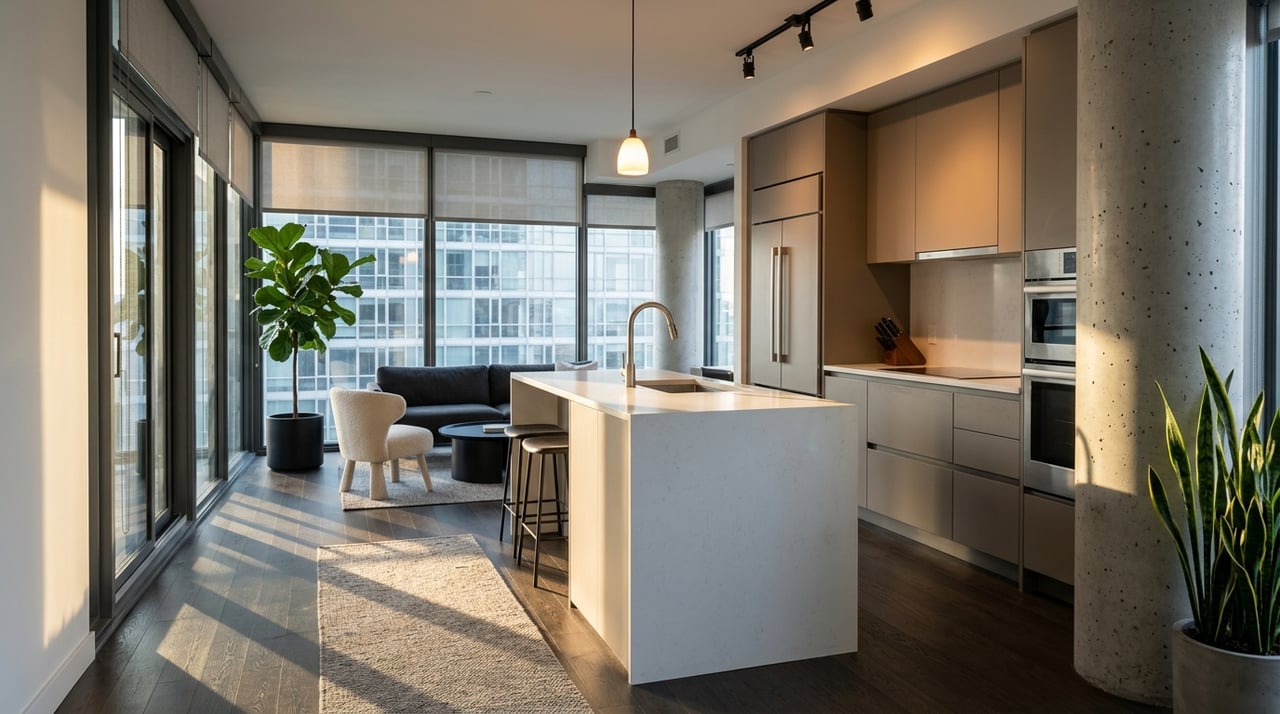
If your condo sits in a premium tower, has notable views, strong amenities, or a more desirable floor plan, your rental performance may differ from the neighborhood median. The reverse is also true. That is why the decision should start with realistic building-level income expectations, not just a rough online estimate.
At first glance, renting out a San Francisco condo can seem straightforward. You find a tenant, collect rent, and hold the property for future upside. In practice, the picture is more complex.
Your projected rent needs to be weighed against HOA dues, property taxes, insurance, repairs, vacancy, and San Francisco compliance costs. A condo that looks attractive on a gross-rent basis can feel very different once you calculate the true net result.
That is especially important in SoMa, where many owners hold in amenity-rich buildings with meaningful monthly dues. If you are comparing renting versus selling, the real question is not “What rent could I get?” It is “What would I actually keep, and is that worth the responsibility?”
If you plan to rent out your condo, San Francisco’s rental rules deserve careful attention. The city first looks at building age and occupancy history when determining what rules may apply.
Units built before June 14, 1979 may have both rent control and eviction protection. Some units may have eviction protection only, including most single-family homes and condos if the tenancy began on or after January 1, 1996.
For covered units, there is no limit on the first rent for a vacant unit, but future increases are capped. From March 1, 2026 through February 28, 2027, the allowable annual increase is 1.6%.
That cap matters because your costs may not rise at the same pace. San Francisco states that annual rent increases must be calculated on base rent only, not passthrough charges. So if HOA dues, taxes, insurance, or maintenance climb faster than 1.6%, your income growth may lag behind your ownership costs.
Leasing a condo in San Francisco also comes with recurring administrative obligations. Owners who rent covered units must report into the Housing Inventory each year, with a reporting deadline of March 1.
When applicable, owners also need a Rent Increase License before annual or banked increases can be enforced. The city has stated that some increases imposed without a license can be null and void.
For condos and buildings with one to nine residential units, the license requirement has applied since March 1, 2023. The city also assesses an annual Rent Board fee on residential units, so renting is not just an income decision. It is also an ongoing compliance commitment.
Even if city rules allow leasing, your HOA may still shape what is practical. California Civil Code 4741 says HOA documents cannot prohibit or unreasonably restrict rentals, but associations can still set a rental cap no lower than 25% of the separate interests and can prohibit transient rentals of 30 days or less.
That means your condo may be legally rentable in theory, while the building’s rental cap, waitlist, or lease-term rules make it harder in practice. Before you decide to keep the unit, it is worth reviewing your HOA documents closely.
A few building-specific questions can quickly clarify the picture:
In high-rise communities, these details can influence both your immediate rental plan and your future exit strategy.
A condo that is rentable is not always equally easy to resell later. Project characteristics can affect how easily future buyers obtain conventional financing.
Fannie Mae flags condo projects with hotel-like or resort-like characteristics, rental pooling, owner occupancy restrictions, or similar transient-use features as ineligible. It also treats very high investment or second-home concentration as a red flag that may require extra due diligence.
In practical terms, a building with rental caps, transient-use features, or a heavy investor mix may narrow the future buyer pool. That does not automatically mean you should sell now, but it does mean your hold decision should account for how the building may be viewed by future lenders and buyers.
Selling often makes sense when you want simplicity, liquidity, or a clean reset. If you expect life or work changes in the next 12 to 36 months, having your equity available may be more valuable than carrying a rental property.
You may also lean toward selling if your projected net rent is modest after dues, taxes, insurance, repairs, vacancy, and compliance costs. In a balanced market, some owners decide that the certainty of a sale is more attractive than the complexity of becoming a landlord.
For luxury SoMa condos, there is another layer to consider. If your unit shows beautifully, sits in a well-regarded tower, and appeals to buyers seeking turnkey vertical living, a well-managed sale can position the property strongly without taking on long-term rental obligations.
Renting can be the stronger choice if your building allows it smoothly, your expected rent is compelling, and your hold period is long enough to justify the added complexity. It may also fit if you want to keep a foothold in San Francisco while you live elsewhere for a period of time.
This path tends to work best when the starting rent is strong. That is especially true for units affected by rent control, because the initial rent can matter more than the allowed annual increase once future increases are limited.
If your condo has low relative carrying costs, strong location appeal within SoMa, and no meaningful HOA hurdles, renting can provide flexibility that selling does not. The key is making sure the numbers work beyond the first year.
If you are weighing both options, focus on a few core questions:
If you can answer those clearly, the decision usually becomes much easier.
In SoMa, this is rarely a one-size-fits-all call. A sleek high-rise condo in one building may be a strong hold, while a similar-looking unit a few blocks away may be better positioned for sale. If you want a tailored, building-specific strategy for your condo, Sean Mamola can help you weigh the numbers, HOA realities, and resale positioning with a private, white-glove approach.

Primary phone
(415) 704-3640License Number
#02056250Address
891 Beach St,Sean Mamola is a San Francisco real estate agent who specializes in luxury properties and penthouses throughout the city's most coveted neighborhoods. As a Global Luxury Specialist with Compass and Rises.co, Sean works with discerning clients who are buying and selling exceptional properties in San Francisco. Since 2018 he has closed 75+ transactions and more than $100M in sales volume across the city's high-rise condo and penthouse market.
Sean focuses on San Francisco's premier areas including South Beach, Yerba Buena, Mission Bay, Pacific Heights, Lower Pacific Heights, Russian Hill, and Nob Hill. His deep knowledge of these neighborhoods allows him to guide clients to properties that perfectly match their lifestyle and investment goals.
Whether you're drawn to the modern luxury of South Beach condos, the urban sophistication of Yerba Buena, the waterfront appeal of Mission Bay, the timeless elegance of Pacific Heights, the historic charm of Russian Hill, or the prestigious heights of Nob Hill, Sean understands what makes each area unique.
For Sellers
Sean creates comprehensive marketing strategies that attract qualified buyers with refined tastes. He believes in elegant staging with meticulous attention to detail, ensuring your property makes an unforgettable impression. His marketing reaches both international and local luxury markets, maximizing exposure for condos, penthouses, condotels, and new developments.
For Buyers
Using cutting-edge technology and market research, Sean carefully analyzes pricing and property trends to find homes that satisfy his clients' specific preferences, price points, and lifestyles. His 24/7 availability and white-glove service ensure you never miss the right opportunity.
Working with Sean and his partnership with Rises.co gives clients significant competitive advantages. His vast network of interconnected agents results in winning offers and an impressively low ratio of properties shown to offers accepted. Sean's impeccable work ethic and precise negotiation skills ensure sellers find the right buyer and buyers secure their dream home.
Before becoming a licensed real estate agent, Sean spent years in luxury hospitality, skills he applies to every client relationship and transaction. He has tremendous respect for people's privacy and consistently exceeds expectations – from international travel to execute transactions to handling unique special requests.
As a Bay Area native who lived in New York City for 15 years, Sean brings a global perspective and genuine appreciation for people from all walks of life. His diverse background helps him connect with clients whether they're local San Francisco residents or international buyers seeking their perfect property.
When not working, Sean enjoys cycling, spending time with his large Irish-Italian family, and volunteering for Food Runners, The Richmond/Ermet Aid Foundation (REAF), and Broadway Cares/Equity Fights AIDS. This community involvement reflects his commitment to giving back to the city he serves.
If you're looking for an exceptional San Francisco real estate agent who specializes in luxury properties and provides truly high-touch service, let's talk. Sean is ready to help you find your perfect San Francisco home or achieve the best possible outcome when selling your property.
Specializing in luxury condos, penthouses, and exceptional properties in South Beach, Yerba Buena, Mission Bay, Pacific Heights, Lower Pacific Heights, Russian Hill, and Nob Hill.
Stay up to date on the latest real estate trends.

Sean Mamola | September 17, 2026
The condo median climbed 22% while sales slowed. Here's what actually moved, and what it means this fall.
September 17, 2026

September 10, 2026

Sean Mamola | September 9, 2026
Sell first or buy first? A 2026 guide for San Francisco move-up sellers.

Sean Mamola | September 8, 2026
Selling a San Francisco condo with tenants in place: your options in 2026.

Sean Mamola | September 5, 2026
As-is or renovate before selling? A 2026 decision guide for SF condo sellers.

Sean Mamola | September 4, 2026
Capital gains on a San Francisco home sale, explained for 2026 sellers.

Sean Mamola | September 3, 2026
One investor now controls eleven storefronts across three blocks. The restaurant announcements are the visible part.

Sean Mamola | September 3, 2026
The real costs of selling a San Francisco condo in 2026, broken down.

CONTACT SEAN MAMOLA AT RISES.CO
CA DRE# 02056250
891 Beach St.,
San Francisco CA 94109