Car-Free Living In Mission Bay: What Daily Life Looks Like
Rises.co May 21, 2026
Rises.co May 21, 2026
Mission Bay is one of the few San Francisco neighborhoods where living without a car can feel less like a sacrifice and more like a lifestyle choice. If you want a simpler daily routine, easier access to transit, and the kind of modern waterfront setting where errands and fresh air fit into the same walk, Mission Bay deserves a closer look. For buyers considering condo living here, it helps to understand what day-to-day life actually feels like before you make a move. Let’s dive in.
Mission Bay has a different feel from many older San Francisco neighborhoods because its redevelopment began in 1998 under the former San Francisco Redevelopment Agency. That newer, more planned layout shows up in the street grid, the open spaces, and the way everyday destinations connect to each other.
Just as important, the neighborhood is flat. SF Travel describes Dogpatch and Mission Bay as entirely flat and easily accessible by public transit, which makes a real difference when your routine depends on walking, biking, or hopping on rail instead of driving.
For many residents, that physical ease is what makes the car-free lifestyle stick. You are not constantly dealing with steep hills or long detours just to pick up groceries, get outside, or catch a train.
A car-free neighborhood only works if you can handle the basics without turning every errand into a project. In Mission Bay, that part of daily life is more practical than many buyers expect.
Gus’s Mission Bay Market sits at 4th and Channel and keeps long hours from 7 a.m. to 9 p.m. That kind of access matters because it gives you a reliable option for quick grocery runs, last-minute dinner ingredients, or simple weeknight convenience.
For pharmacy needs, UCSF Health’s Pharmacy Mission Bay serves both UCSF patients and the general public. The pharmacy offers prescriptions, over-the-counter items, consultations, vaccinations, and free delivery, which can reduce the number of trips you need to make in person.
Mission Bay also benefits from nearby overlap with Dogpatch. SF Travel notes strong dining options across Dogpatch and Mission Bay, with Dogpatch known for bakeries, coffee shops, bars, and restaurants, so your routine can stay local while still giving you nearby variety.
One reason car-free living feels more realistic in Mission Bay is that open space is part of the neighborhood, not an afterthought. The area’s parks make it easier to fit movement, downtime, and social time into your normal routine.
The Mission Bay parks system covers 24 acres and includes Mission Creek Park, Mission Bay Kids Park, Mission Bay Commons, Mariposa Park, and the Berry Street and Channel Street dog parks. Features listed by San Francisco Recreation and Parks include plazas, esplanades, sport courts, a boathouse, a boat launch, and waterfront views.
Mission Bay Commons alone offers more than two acres of lawn and green space. That means your dog break, coffee walk, lunch outside, or casual meetup does not need planning or a drive across town.
Bayfront Park adds another layer to daily life. The city describes it as a 5.4-acre waterfront park between Chase Center and San Francisco Bay, and it connects to the Bay Trail, giving residents another easy option for walking, jogging, or simply getting outside close to home.
If you live in Mission Bay without a car, transit does the heavy lifting. The neighborhood’s strongest advantage is not just that it has rail access, but that the rail line is woven into the area in a practical way.
The T Third Street is the core line for Mission Bay. SFMTA lists area stops at 4th St & King, 3rd St & Mission Rock, UCSF/Chase Center, and UCSF Medical Center, with weekday service from 6 a.m. to midnight and weekend service from 8 a.m. to midnight.
That route also gives you direct service to downtown and Chinatown through the Central Subway. For many people who work downtown, visit UCSF regularly, or spend time in nearby neighborhoods, that direct connection is what makes a no-car routine workable.
Mission Bay is not limited to one transit option, either. SFMTA also lists additional service in the broader SoMa and Mission Bay area, including the 10 Townsend, 30 Stockton, 55 Dogpatch, 81X Caltrain Express, and 91 Owl.
That extra route coverage matters more than it may seem at first glance. A neighborhood with backup options usually feels much easier to live in than one where your entire routine depends on a single line running perfectly.
Car-free living does not mean giving up regional mobility. In Mission Bay, Caltrain helps fill that gap.
Caltrain says the walk from San Francisco’s 4th & King Station to Chase Center is about 15 to 20 minutes, and riders can connect to the T Third Street from that station area. For residents near the north side of Mission Bay, that puts regional rail within realistic reach.
That setup can be especially useful if your routine includes Peninsula travel or occasional trips beyond central San Francisco. You may not drive daily, but you still have a clear path to a broader transit network.
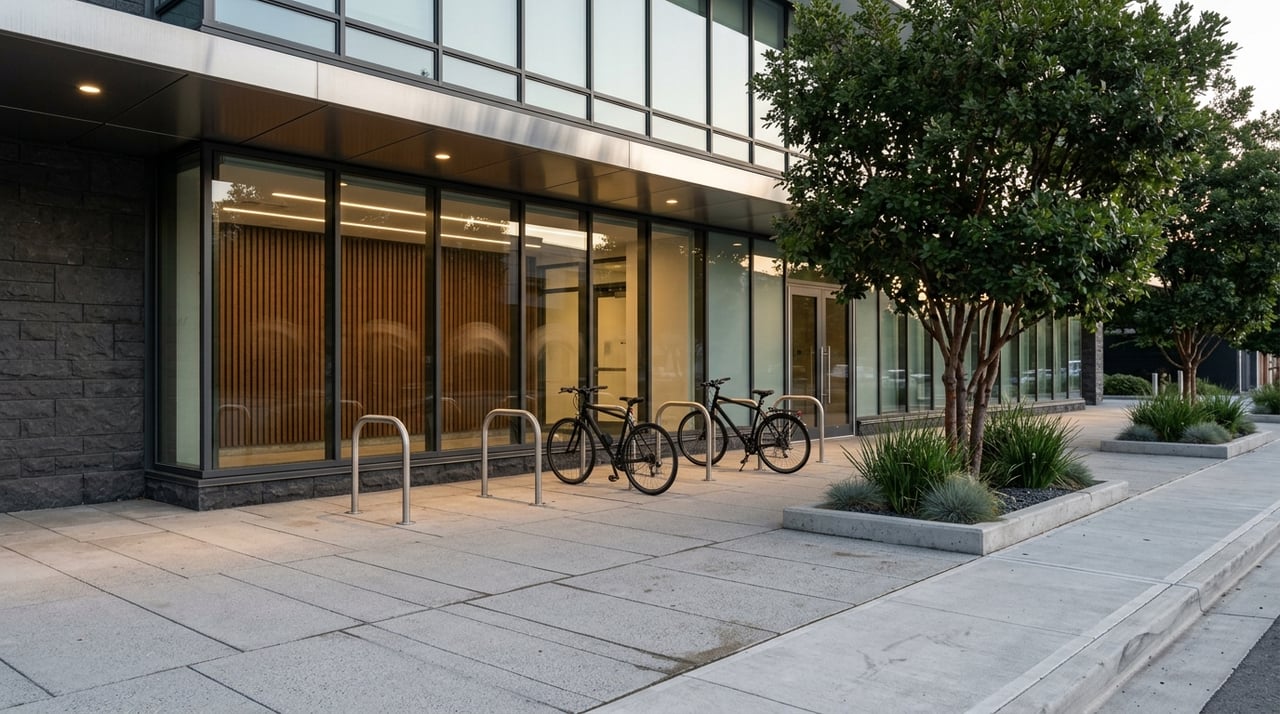
Mission Bay’s flat terrain also supports biking in a way that feels approachable for more residents. In a city known for hills, flat streets can change how often you actually choose to bike.
SFMTA’s bike network map covers city lanes, routes, and paths and points riders toward Bay Wheels bike share stations. That gives you options whether you own a bike or prefer occasional bike-share trips for short hops around the neighborhood and waterfront.
The 3rd Street corridor is especially important. SFMTA says the 3rd Street Quick-Build Project created a protected bikeway from the San Francisco Bay Trail to Townsend Street, connecting Mission Bay with the Embarcadero and King Street corridor, the Bay Trail, and Oracle Park.
SFMTA also completed the Third Street Bridge Bikeway Connection, which links the protected Terry Francois Boulevard bikeway to the Bay Trail. In practical terms, those links make it easier to think of biking as transportation, not just recreation.
The bike network is still improving. SFMTA’s Mission Bay Boulevard quick-build project includes traffic calming and bike-lane delineators on Mission Bay Drive and Mission Bay Boulevard North and South, showing that active transportation infrastructure is still being added.
For the right resident, car-free living in Mission Bay can feel streamlined. You might start with a coffee and a walk through Mission Bay Commons, pick up groceries at Gus’s, head to work or appointments via the T Third Street, and end the day with a waterfront walk near Bayfront Park.
If your routine centers on downtown, UCSF, Chase Center, the waterfront, or nearby Dogpatch and SoMa, the neighborhood’s design can support that rhythm well. The mix of rail, walkability, parks, and bike access allows many daily needs to happen within a compact area.
That is also part of Mission Bay’s appeal for condo buyers. The neighborhood supports a more contained, lower-friction style of urban living, which can pair well with buyers who value convenience, design, and access over car ownership.
Mission Bay is a strong candidate for car-free living, but it is not one-size-fits-all. The lifestyle works best when most of your destinations are urban, nearby, and transit-connected.
Late-night trips, event nights around Chase Center, or direct point-to-point travel may still call for rideshare from time to time. Based on transit hours and neighborhood activity patterns, rideshare works best here as a supplement rather than your main transportation plan.
A private vehicle can still be useful if your routine regularly includes far-suburban destinations or long cross-bay trips. The key is being honest about where you go most often and whether your lifestyle matches Mission Bay’s strengths.
Mission Bay tends to make the most sense for buyers who want a simplified city routine and are comfortable combining walking, biking, Muni, Caltrain, and occasional rideshare. It can be an especially compelling choice if you value a newer neighborhood layout, waterfront access, and modern condo living.
For buyers considering a high-rise or luxury condo, that matters beyond transportation alone. Car-free living often connects to a broader lifestyle decision about how you want your home, building, and neighborhood to work together on a daily basis.
If that is the kind of move you are considering, Mission Bay stands out as one of San Francisco’s more realistic places to do it well. And if you want expert guidance on how specific buildings and locations support that lifestyle, Sean Mamola can help you evaluate Mission Bay with clarity and confidence.
Primary phone
(415) 704-3640License Number
#02056250Address
891 Beach StSean Mamola is a San Francisco real estate agent who specializes in luxury properties and penthouses throughout the city's most coveted neighborhoods. As a Global Luxury Specialist with Compass and Rises.co, Sean works with discerning clients who are buying and selling exceptional properties in San Francisco. Since 2018 he has closed 75+ transactions and more than $100M in sales volume across the city's high-rise condo and penthouse market.
Sean focuses on San Francisco's premier areas including South Beach, Yerba Buena, Mission Bay, Pacific Heights, Lower Pacific Heights, Russian Hill, and Nob Hill. His deep knowledge of these neighborhoods allows him to guide clients to properties that perfectly match their lifestyle and investment goals.
Whether you're drawn to the modern luxury of South Beach condos, the urban sophistication of Yerba Buena, the waterfront appeal of Mission Bay, the timeless elegance of Pacific Heights, the historic charm of Russian Hill, or the prestigious heights of Nob Hill, Sean understands what makes each area unique.
For Sellers
Sean creates comprehensive marketing strategies that attract qualified buyers with refined tastes. He believes in elegant staging with meticulous attention to detail, ensuring your property makes an unforgettable impression. His marketing reaches both international and local luxury markets, maximizing exposure for condos, penthouses, condotels, and new developments.
For Buyers
Using cutting-edge technology and market research, Sean carefully analyzes pricing and property trends to find homes that satisfy his clients' specific preferences, price points, and lifestyles. His 24/7 availability and white-glove service ensure you never miss the right opportunity.
Working with Sean and his partnership with Rises.co gives clients significant competitive advantages. His vast network of interconnected agents results in winning offers and an impressively low ratio of properties shown to offers accepted. Sean's impeccable work ethic and precise negotiation skills ensure sellers find the right buyer and buyers secure their dream home.
Before becoming a licensed real estate agent, Sean spent years in luxury hospitality, skills he applies to every client relationship and transaction. He has tremendous respect for people's privacy and consistently exceeds expectations – from international travel to execute transactions to handling unique special requests.
As a Bay Area native who lived in New York City for 15 years, Sean brings a global perspective and genuine appreciation for people from all walks of life. His diverse background helps him connect with clients whether they're local San Francisco residents or international buyers seeking their perfect property.
When not working, Sean enjoys cycling, spending time with his large Irish-Italian family, and volunteering for Food Runners, The Richmond/Ermet Aid Foundation (REAF), and Broadway Cares/Equity Fights AIDS. This community involvement reflects his commitment to giving back to the city he serves.
If you're looking for an exceptional San Francisco real estate agent who specializes in luxury properties and provides truly high-touch service, let's talk. Sean is ready to help you find your perfect San Francisco home or achieve the best possible outcome when selling your property.
Specializing in luxury condos, penthouses, and exceptional properties in South Beach, Yerba Buena, Mission Bay, Pacific Heights, Lower Pacific Heights, Russian Hill, and Nob Hill.
Stay up to date on the latest real estate trends.
Sean Mamola | October 1, 2026
Showplace Square's showroom buildings are picking up tech tenants, and a Michelin-starred steakhouse anchors its traffic circle
Sean Mamola | September 24, 2026
Three changes on three different clocks at the top of Pacific Heights
Sean Mamola | September 22, 2026
Rates just climbed back to 7%. Here's why waiting them out has almost never paid off for a San Francisco condo buyer.
Sean Mamola | September 21, 2026
The Fed just hiked for the first time since 2023. Before you wait, it's worth naming what you're waiting for.

Sean Mamola | September 17, 2026
The condo median climbed 22% while sales slowed. Here's what actually moved, and what it means this fall.
Sean Mamola | September 17, 2026
The Giants are done for 2026. Here's how the ballpark-to-arena calendar actually runs this fall.

Sean Mamola | September 10, 2026
A ticketed blockbuster at SFMOMA and a free festival finale on the Great Lawn, a few hundred feet apart

Sean Mamola | September 9, 2026
Sell first or buy first? A 2026 guide for San Francisco move-up sellers.

Sean Mamola | September 8, 2026
Selling a San Francisco condo with tenants in place: your options in 2026.
CONTACT SEAN MAMOLA AT RISES.CO
CA DRE# 02056250
891 Beach St.,
San Francisco CA 94109