EV Charging In Pacific Heights Condos: What To Look For
Rises.co | December 18, 2025
Rises.co | December 18, 2025
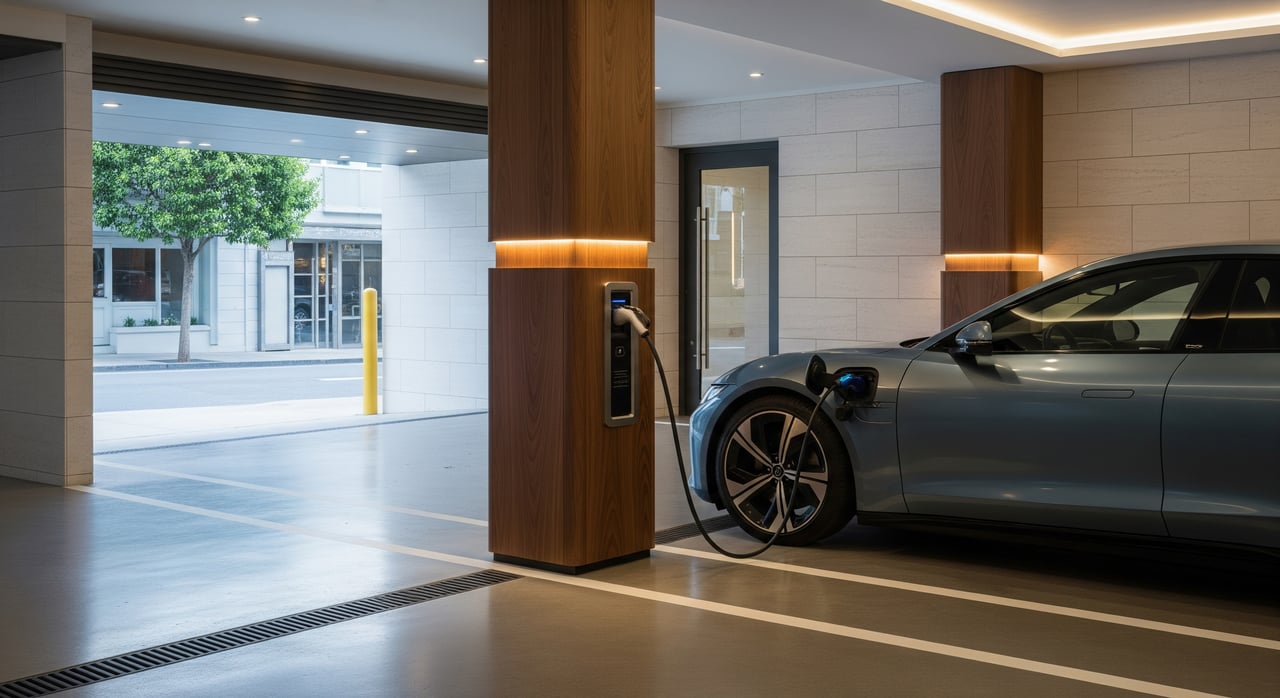
Eyeing a Pacific Heights condo and wondering if you can actually charge your EV at home? You are not alone. Many of the neighborhood’s most coveted buildings were designed long before electric cars, so access and installation can vary widely by property. In this guide, you will learn how to spot true EV readiness, what to ask the HOA, what typical costs and timelines look like, and how to protect your purchase. Let’s dive in.
Pacific Heights blends pre-war luxury buildings, boutique conversions, and newer mid-rise structures. Older properties often have subterranean garages, narrow ramps, and limited conduit paths, which can make retrofits more involved. Newer buildings may offer better electrical distribution and some pre-installed conduit or spare panel capacity.
Historic character and shared infrastructure mean you should confirm how power is delivered to the garage and whether there is room to expand. Approvals can involve both the HOA and city permitting. If the building is in a historic district or has landmark features, visible equipment could require extra design review.
Your parking arrangement shapes your options and costs.
When a building offers deeded spaces plus existing conduit or spare panel capacity, you are starting from a stronger position.
Strong documentation beats guesswork. Request the following early in your diligence:
These documents reveal policy realities, financial capacity, and any prior decisions that affect your install.
A little vocabulary goes a long way when comparing buildings:
Ask for a photo of the electrical panel and breaker schedule, plus any recent electrical assessments.
Costs vary by scope, building age, and parking layout, but you can use these industry-typical ranges as a starting point:
Timelines also scale with complexity. A simple owner installation can take several weeks, including permits and contractor scheduling. HOA-managed retrofits commonly take 3 to 9 months for design, approvals, permits, and construction. Projects that require utility service changes can extend to 9 to 18 months or more.
Incentives update frequently. Regional programs, utility make-ready support, and state resources may be available, so verify current options for Bay Area multi-unit dwellings and check PG&E’s EV and TOU rate options.
Use this field checklist to spot EV-friendly buildings quickly. Mark items Yes, No, or Unknown and follow up during disclosures.
A building that checks several of these boxes is a stronger candidate for near-term charging.
How electricity is measured and paid for affects fairness and operating cost.
If you anticipate multiple EVs in the building, ask about open standards such as OCPP, which can reduce vendor lock-in and help future-proof the system.
You will likely encounter one of these practical approaches in Pacific Heights buildings:
Choose the model that matches your parking type, board appetite, and timeline.
If EV access is essential, build it into your purchase strategy.
These steps protect you from surprises and clarify feasibility within your closing timeline.
Think about where EV adoption is headed in your building. Even if you start with lower amperage, installing conduit and panel capacity for 40 to 50 amp circuits can save money later. Load management can stretch capacity for more residents without immediate utility upgrades.
Ask whether the HOA is exploring a phased plan: assessment, pilot stalls, then a scalable rollout. That approach often balances near-term needs with long-term costs.
Evaluating EV readiness in Pacific Heights requires more than a quick glance at the garage. You want clarity on parking rights, panel capacity, conduit routes, governance, and the building’s appetite for upgrades. A knowledgeable advisor can streamline your diligence and position your offer for success.
If you would like a focused walk-through of target buildings or help structuring EV-friendly contingencies, connect with Sean Mamola for a private consultation.
Primary phone
(415) 704-3640License Number
#02056250Address
891 Beach StSean Mamola is a San Francisco real estate agent who specializes in luxury properties and penthouses throughout the city's most coveted neighborhoods. As a Global Luxury Specialist with Compass and Rises.co, Sean works with discerning clients who are buying and selling exceptional properties in San Francisco. Since 2018 he has closed 75+ transactions and more than $100M in sales volume across the city's high-rise condo and penthouse market.
Sean focuses on San Francisco's premier areas including South Beach, Yerba Buena, Mission Bay, Pacific Heights, Lower Pacific Heights, Russian Hill, and Nob Hill. His deep knowledge of these neighborhoods allows him to guide clients to properties that perfectly match their lifestyle and investment goals.
Whether you're drawn to the modern luxury of South Beach condos, the urban sophistication of Yerba Buena, the waterfront appeal of Mission Bay, the timeless elegance of Pacific Heights, the historic charm of Russian Hill, or the prestigious heights of Nob Hill, Sean understands what makes each area unique.
For Sellers
Sean creates comprehensive marketing strategies that attract qualified buyers with refined tastes. He believes in elegant staging with meticulous attention to detail, ensuring your property makes an unforgettable impression. His marketing reaches both international and local luxury markets, maximizing exposure for condos, penthouses, condotels, and new developments.
For Buyers
Using cutting-edge technology and market research, Sean carefully analyzes pricing and property trends to find homes that satisfy his clients' specific preferences, price points, and lifestyles. His 24/7 availability and white-glove service ensure you never miss the right opportunity.
Working with Sean and his partnership with Rises.co gives clients significant competitive advantages. His vast network of interconnected agents results in winning offers and an impressively low ratio of properties shown to offers accepted. Sean's impeccable work ethic and precise negotiation skills ensure sellers find the right buyer and buyers secure their dream home.
Before becoming a licensed real estate agent, Sean spent years in luxury hospitality, skills he applies to every client relationship and transaction. He has tremendous respect for people's privacy and consistently exceeds expectations – from international travel to execute transactions to handling unique special requests.
As a Bay Area native who lived in New York City for 15 years, Sean brings a global perspective and genuine appreciation for people from all walks of life. His diverse background helps him connect with clients whether they're local San Francisco residents or international buyers seeking their perfect property.
When not working, Sean enjoys cycling, spending time with his large Irish-Italian family, and volunteering for Food Runners, The Richmond/Ermet Aid Foundation (REAF), and Broadway Cares/Equity Fights AIDS. This community involvement reflects his commitment to giving back to the city he serves.
If you're looking for an exceptional San Francisco real estate agent who specializes in luxury properties and provides truly high-touch service, let's talk. Sean is ready to help you find your perfect San Francisco home or achieve the best possible outcome when selling your property.
Specializing in luxury condos, penthouses, and exceptional properties in South Beach, Yerba Buena, Mission Bay, Pacific Heights, Lower Pacific Heights, Russian Hill, and Nob Hill.
Stay up to date on the latest real estate trends.
Sean Mamola | October 1, 2026
Showplace Square's showroom buildings are picking up tech tenants, and a Michelin-starred steakhouse anchors its traffic circle
Sean Mamola | September 24, 2026
Three changes on three different clocks at the top of Pacific Heights
Sean Mamola | September 22, 2026
Rates just climbed back to 7%. Here's why waiting them out has almost never paid off for a San Francisco condo buyer.
Sean Mamola | September 21, 2026
The Fed just hiked for the first time since 2023. Before you wait, it's worth naming what you're waiting for.

Sean Mamola | September 17, 2026
The condo median climbed 22% while sales slowed. Here's what actually moved, and what it means this fall.
Sean Mamola | September 17, 2026
The Giants are done for 2026. Here's how the ballpark-to-arena calendar actually runs this fall.

Sean Mamola | September 10, 2026
A ticketed blockbuster at SFMOMA and a free festival finale on the Great Lawn, a few hundred feet apart

Sean Mamola | September 9, 2026
Sell first or buy first? A 2026 guide for San Francisco move-up sellers.

Sean Mamola | September 8, 2026
Selling a San Francisco condo with tenants in place: your options in 2026.
CONTACT SEAN MAMOLA AT RISES.CO
CA DRE# 02056250
891 Beach St.,
San Francisco CA 94109