Sanchez Slow Street in Noe Valley: What Buyers Should Know
Sean Mamola | August 20, 2026
Sean Mamola | August 20, 2026
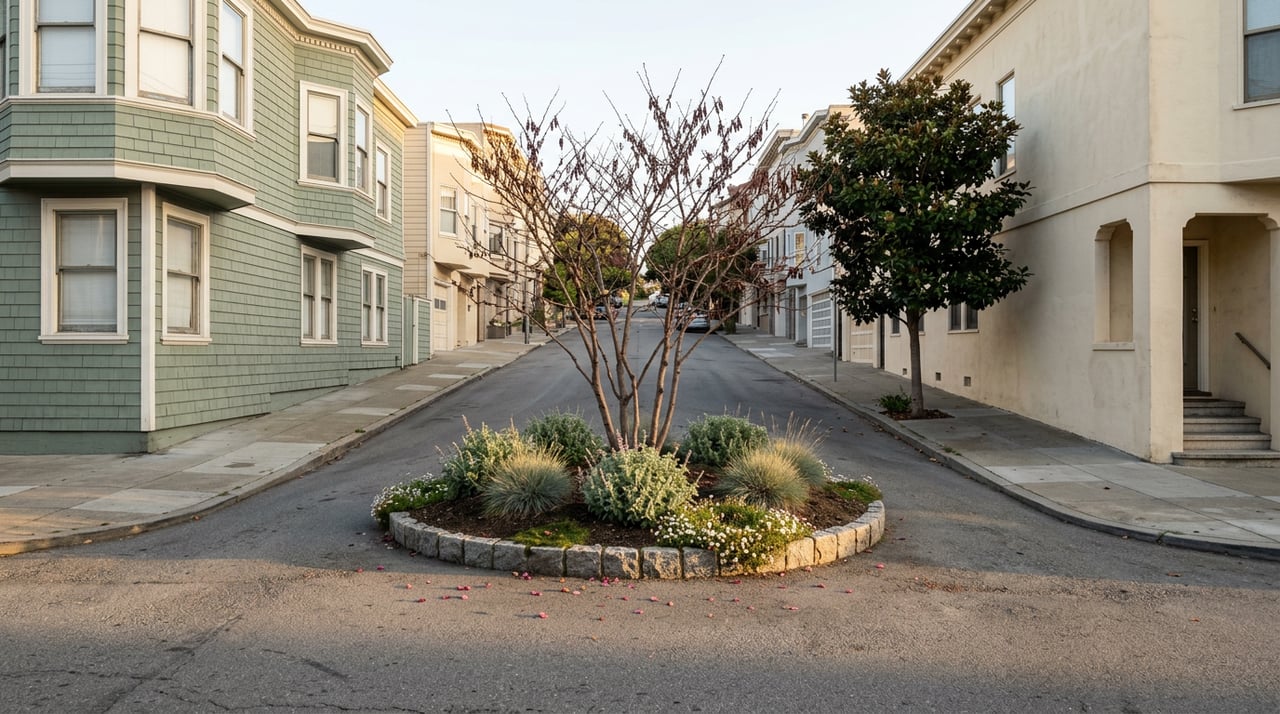
Sanchez Street through Noe Valley is a permanent part of San Francisco's Slow Streets program, not a temporary pandemic leftover. The SFMTA Board affirmed it on December 6, 2022, the city funded a capital redesign of the corridor in 2023, and construction began in 2025. If you are buying or selling between roughly 23rd and 30th on Sanchez, you are transacting on a street the city has committed to keeping quiet, and that changes what the block is worth to a certain kind of buyer.
Sanchez Street between 23rd and 30th is closed to through traffic, signed at 15 miles per hour, and open to residents, deliveries, and anyone on foot or on a bike. It started as emergency infrastructure in June 2020, when San Francisco closed dozens of streets so people had somewhere to walk without crowding sidewalks.
Emergency measures are supposed to end when the emergency does. This one did the opposite. The SFMTA Board approved Sanchez as a post-pandemic Slow Street in August 2021, then affirmed its place in the ongoing citywide program on December 6, 2022. The SFMTA project page now describes the corridor in the language of permanent infrastructure, connecting the 24th Street commercial strip to the Upper Noe Recreation Center and the shops along the way.
The number that made the decision easy was traffic volume. SFMTA's May 2023 evaluation measured Sanchez at roughly 320 cars per day against a 1,000-car threshold for staying in the program. That is a wide margin, and it matters more than it sounds. A slow street that barely clears its threshold is a slow street that can be argued about later. Sanchez cleared it by a factor of three.
Slowly, and with more paperwork than cones.
Milestone | When |
|---|---|
Designated a COVID-19 Response Slow Street | June 2020 |
Approved by the SFMTA Board as a post-pandemic Slow Street | August 2021 |
Affirmed in the ongoing citywide Slow Streets program | December 6, 2022 |
$277,300 in Prop K neighborhood funds recommended by the SFCTA advisory committee | February 22, 2023 |
Funding approved by the Transportation Authority Board | March 21, 2023 |
Community design walk covering landscaped islands, traffic circles, and on-street bike parking | September 14, 2023 |
Neighbors review preliminary intersection designs | March 18, 2024 |
Final design presented | April 24, 2024 |
San Francisco Fire sign-off, then a public hearing | January and March 2025 |
Construction begins | Around August to September 2025 |
The funding is worth understanding, because it says something about how this actually happened. The $277,300 came out of expiring District 8 neighborhood money, and reporting by The Frisc indicates SFMTA approached the supervisor's office with the idea rather than the other way around. The scope was modest by capital-project standards: roughly fifty signs and up to four concrete traffic-calming islands.
I have watched a lot of San Francisco infrastructure promises die between the workshop and the shovel. The reason this one did not is that the money was use-it-or-lose-it and the neighborhood had already proved demand. That combination is rare, and it is the honest explanation for why Sanchez got built while other slow streets got studied.
While the redesign worked through its approvals, a volunteer group called Friends of Slow Sanchez stopped waiting. They kicked off Sanchez Greenway Phase 1 at Noe Cafe on April 23, 2025, and finished on June 28 of the same year: twelve sidewalk gardens, planted in partnership with Friends of the Urban Forest, built by residents rather than contractors. A survey they ran identified 167 potential garden locations across fourteen blocks, and the group raised more than $22,000 toward the work.
Sit with the timeline for a second. The city's process took from early 2023 to late 2025 to get from funded to construction. The neighbors went from kickoff to twelve finished gardens in about ten weeks.
The block also carries a mural, painted on the roadway between 24th and Elizabeth by Noe Valley artist Amos Goldbaum, completed in early 2021 and funded by the same group. It predates most of the official process entirely, which is the whole point.
This is the part I tell buyers to pay attention to, and it has nothing to do with gardens. Physical improvements are a signal of organizational capacity. A block that can raise $22,000, coordinate with a nonprofit, and finish a project in ten weeks is a block that will show up when something actually threatens it. That is a durable characteristic of a neighborhood. Landscaping is not.
Two recurring things, plus periodic closures:
At that May 2026 block party, Friends of Slow Sanchez received a Certificate of Honor from District 8 Supervisor Rafael Mandelman and State Senator Scott Wiener, with support from the Civic Joy Fund.
From experience: I met a buyer at a downtown open house who had already narrowed her search to a three-block stretch and would not look one street further south. Not the neighborhood. The blocks. What she told me afterward has stuck with me: she had walked the area picturing herself leaving in the morning and coming home at night, at the hours she would actually be doing it, and only a handful of those blocks passed. She was right to shop that way. In San Francisco one block genuinely changes how a place feels, which is why a street-level designation like Slow Sanchez tells you more about daily life than any neighborhood-wide statistic will.
No one can answer that honestly, and I am not going to pretend otherwise.
There is no San Francisco study, and no American study I can find, that isolates what a slow street designation does to nearby home prices. The closest published work looks at London's Low Traffic Neighbourhoods, where a 2024 analysis by a UK brokerage found homes inside LTNs averaged about nine percent above the London average. That is agent-produced marketing research on a different country's program, and it is correlational: LTNs were installed in areas that were already expensive. It does not establish that the street caused the premium.
What I can tell you is what Noe Valley did on its own. The SF Standard reported in May 2026 that starter homes in the neighborhood now run around $3 million, up from under $500,000 in the mid-1990s. It cited a 23rd Street house bought for roughly $250,000 in the 1980s that sold for just under $4.8 million in 2026, and a Jersey Street rebuild that traded near $5 million in 2020 and resold for $7.6 million in April 2026.
Noe Valley was appreciating hard before a single cone went down, and it kept appreciating after. Attributing any slice of that to Sanchez specifically would be a guess dressed up as analysis. What I will say is narrower and defensible: the slow street changes who wants the block. Families with young kids and buyers who want a walkable, low-car life will pay attention to Sanchez in a way they would not pay attention to an otherwise identical house two blocks east. That is a buyer-pool effect, and buyer pools are what set prices at the margin. If that is the profile you fit, I go deeper on it in is Noe Valley the right neighborhood for your family.
Four things, in order of how often they surprise people:
For buyers. Sanchez is one of the few San Francisco blocks where the lifestyle claim in the listing is backed by measurable evidence: roughly 320 cars per day, a 15 mile per hour limit, and more than 1,000 pedestrians on a typical Saturday. If a low-car street is genuinely what you want, this is a short list, and short lists mean competition. Do not assume you will negotiate here the way you would two streets over. If you want the same walkable, amenity-dense trade in a condo rather than a house, the waterfront corridors around South Beach and the East Cut and Mission Bay deliver a version of it with a very different price and product. I walk through that exact trade in car-free waterfront living in South Beach and the East Cut.
For sellers. The street is a marketing asset, but only if you use it correctly. Photograph and schedule around it: a Saturday showing timed near the 10 a.m. walk shows the block doing the thing buyers are buying. Do not put a price premium in your list price on the theory that the slow street is worth a percentage. You will not be able to support it in an appraisal, and there is no comp set that proves it.
For the Noe Valley market. The larger story is that a piece of emergency infrastructure has now survived a multi-year city redesign, been out-built by its own residents, and been formally recognized by two elected officials. Political durability is the variable that matters for anyone underwriting the block long term, and Sanchez has accumulated more of it than any other slow street in the city. One caveat worth holding: Supervisor Mandelman's term ends in January 2027, and the corridor's most consistent institutional champion will change.
Is the Sanchez slow street permanent? It is part of San Francisco's ongoing Slow Streets program, affirmed by the SFMTA Board on December 6, 2022, and the city has since funded and built physical upgrades along the corridor. "Ongoing" is the SFMTA's own word rather than "permanent," so it is a policy commitment rather than a legal guarantee, but the capital investment makes reversal unlikely.
Which blocks of Sanchez are included? The corridor runs roughly from 23rd Street to 30th Street through Noe Valley. Confirm the exact block on SFMTA's project page before assuming a specific address is included.
Can I still drive to my house on a slow street? Yes. Slow streets restrict through traffic, not local access. Residents, deliveries, and emergency vehicles get through. What you lose is cut-through drivers, which is the entire point.
How much does a home in Noe Valley cost in 2026? The SF Standard reported in May 2026 that entry-level houses in Noe Valley run around $3 million, with recent trades well above that. Neighborhood medians move quarter to quarter, so ask for current MLS comps for the specific blocks you are considering rather than relying on a published range.
Does living on a slow street affect resale? It changes who your buyer pool is more than it changes a number. There is no credible study quantifying a slow street price premium in San Francisco. Treat any specific percentage you are quoted as unsupported.
What is Friends of Slow Sanchez? A volunteer group of Noe Valley neighbors and merchants along the corridor, originally formed in June 2020 around intersection safety. They run the greenway plantings, the block parties, and the recurring programming, and they received a Certificate of Honor from Supervisor Mandelman and Senator Wiener in May 2026.
Wondering whether a block like this is worth paying up for, or how to price a home whose best feature is the street it sits on? Sean Mamola is a Global Luxury Specialist with Compass and a Bay Area native with 17+ years of experience, from entry-level condos to an $8.7M South Beach penthouse. He brings the market data and the block-level detail that listing photos leave out.
Schedule a consultation or call (415) 704-3640.
Primary phone
(415) 704-3640License Number
#02056250Address
891 Beach StSean Mamola is a San Francisco real estate agent who specializes in luxury properties and penthouses throughout the city's most coveted neighborhoods. As a Global Luxury Specialist with Compass and Rises.co, Sean works with discerning clients who are buying and selling exceptional properties in San Francisco. Since 2018 he has closed 75+ transactions and more than $100M in sales volume across the city's high-rise condo and penthouse market.
Sean focuses on San Francisco's premier areas including South Beach, Yerba Buena, Mission Bay, Pacific Heights, Lower Pacific Heights, Russian Hill, and Nob Hill. His deep knowledge of these neighborhoods allows him to guide clients to properties that perfectly match their lifestyle and investment goals.
Whether you're drawn to the modern luxury of South Beach condos, the urban sophistication of Yerba Buena, the waterfront appeal of Mission Bay, the timeless elegance of Pacific Heights, the historic charm of Russian Hill, or the prestigious heights of Nob Hill, Sean understands what makes each area unique.
For Sellers
Sean creates comprehensive marketing strategies that attract qualified buyers with refined tastes. He believes in elegant staging with meticulous attention to detail, ensuring your property makes an unforgettable impression. His marketing reaches both international and local luxury markets, maximizing exposure for condos, penthouses, condotels, and new developments.
For Buyers
Using cutting-edge technology and market research, Sean carefully analyzes pricing and property trends to find homes that satisfy his clients' specific preferences, price points, and lifestyles. His 24/7 availability and white-glove service ensure you never miss the right opportunity.
Working with Sean and his partnership with Rises.co gives clients significant competitive advantages. His vast network of interconnected agents results in winning offers and an impressively low ratio of properties shown to offers accepted. Sean's impeccable work ethic and precise negotiation skills ensure sellers find the right buyer and buyers secure their dream home.
Before becoming a licensed real estate agent, Sean spent years in luxury hospitality, skills he applies to every client relationship and transaction. He has tremendous respect for people's privacy and consistently exceeds expectations – from international travel to execute transactions to handling unique special requests.
As a Bay Area native who lived in New York City for 15 years, Sean brings a global perspective and genuine appreciation for people from all walks of life. His diverse background helps him connect with clients whether they're local San Francisco residents or international buyers seeking their perfect property.
When not working, Sean enjoys cycling, spending time with his large Irish-Italian family, and volunteering for Food Runners, The Richmond/Ermet Aid Foundation (REAF), and Broadway Cares/Equity Fights AIDS. This community involvement reflects his commitment to giving back to the city he serves.
If you're looking for an exceptional San Francisco real estate agent who specializes in luxury properties and provides truly high-touch service, let's talk. Sean is ready to help you find your perfect San Francisco home or achieve the best possible outcome when selling your property.
Specializing in luxury condos, penthouses, and exceptional properties in South Beach, Yerba Buena, Mission Bay, Pacific Heights, Lower Pacific Heights, Russian Hill, and Nob Hill.
Stay up to date on the latest real estate trends.
Sean Mamola | October 1, 2026
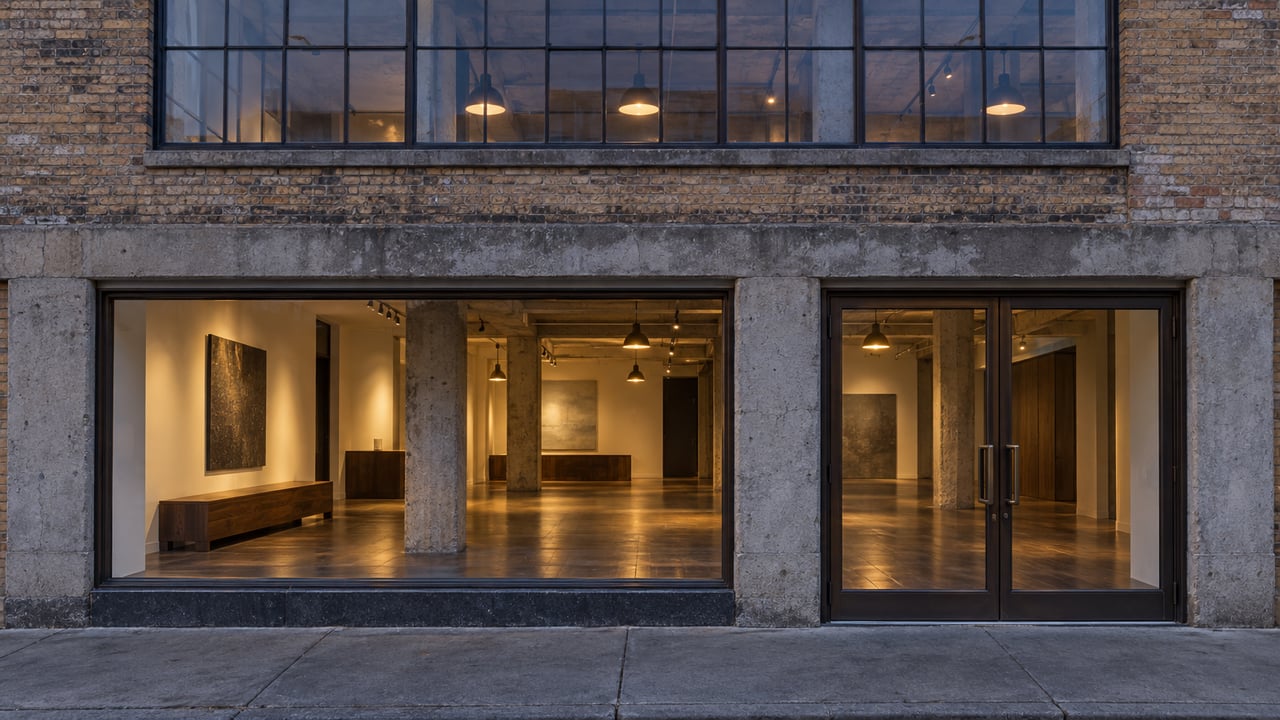
Showplace Square's showroom buildings are picking up tech tenants, and a Michelin-starred steakhouse anchors its traffic circle
Sean Mamola | September 24, 2026
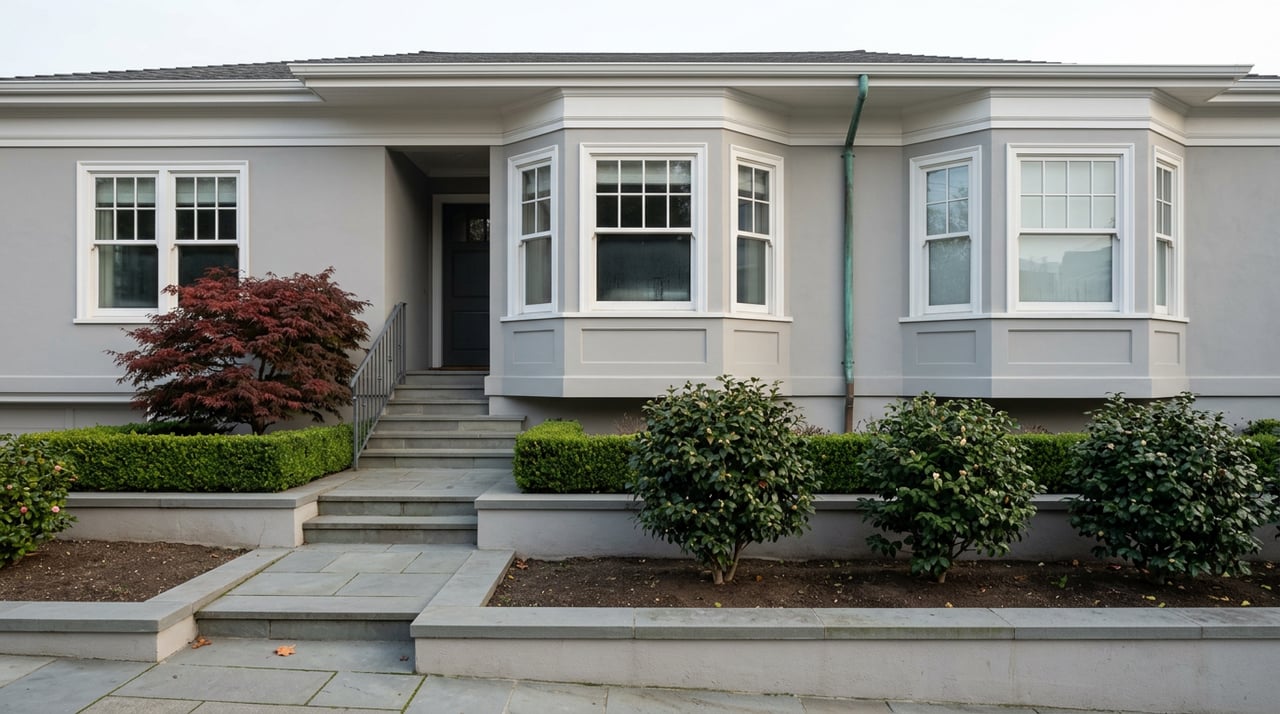
Three changes on three different clocks at the top of Pacific Heights
Sean Mamola | September 22, 2026
Rates just climbed back to 7%. Here's why waiting them out has almost never paid off for a San Francisco condo buyer.
Sean Mamola | September 21, 2026
The Fed just hiked for the first time since 2023. Before you wait, it's worth naming what you're waiting for.

Sean Mamola | September 17, 2026
The condo median climbed 22% while sales slowed. Here's what actually moved, and what it means this fall.
Sean Mamola | September 17, 2026
The Giants are done for 2026. Here's how the ballpark-to-arena calendar actually runs this fall.

Sean Mamola | September 10, 2026
A ticketed blockbuster at SFMOMA and a free festival finale on the Great Lawn, a few hundred feet apart

Sean Mamola | September 9, 2026
Sell first or buy first? A 2026 guide for San Francisco move-up sellers.

Sean Mamola | September 8, 2026
Selling a San Francisco condo with tenants in place: your options in 2026.
CONTACT SEAN MAMOLA AT RISES.CO
CA DRE# 02056250
891 Beach St.,
San Francisco CA 94109