San Francisco Condos in August: Higher Prices, Fewer Listings, One New Lending Rule
Sean Mamola | September 17, 2026

Sean Mamola | September 17, 2026
August is supposed to be the quiet month, and by the sales count it was. Two hundred fourteen condos closed in San Francisco, a quarter fewer than in July. That's the calendar doing what the calendar does.
Everything else about the month ran the other way. The condo median landed at about $1.23 million, 22% above last August. More than half the condos that closed sold for more than their asking price. Active condo listings ended the month down 36% from a year ago. In Compass's September report, which carries data through August, San Francisco is the only Bay Area county where condos gained meaningfully in both price and sales.
Fewer deals, at higher prices, out of a smaller pool of listings. That's the month in a sentence, and it's worth unpacking, because two of those three numbers are more complicated than they look.
San Francisco, August 2026 | Condos | Single-family houses |
|---|---|---|
Closed sales | 214 (+11% YoY, -25% MoM) | 150 (-9% YoY, -16% MoM) |
Median sale price | $1.233M (+22% YoY) | $1.855M (+24% YoY) |
Median price per sq ft | +19% YoY | +19% YoY |
Sold over list price | 54% (+31 pts YoY) | 85% (+18 pts YoY) |
Average days on market | 44 (was 60) | 21 (was 30) |
Absorption rate | 56% (+21 pts YoY) | 108% |
Months of supply | 1.9 (was 3.3) | 1.0 |
Active listings | Down 36% | Down 31% |
Source: Compass International Holdings, September 2026 report (data through August 2026). Figures are approximate and preliminary.
Across both property types, the city finished August with 570 active listings, 35% below last year, even though new listings rose 10%. Sellers are showing up. Buyers are clearing the shelves faster than the shelves get restocked.
Compass puts San Francisco's year-over-year gain in the single-family median at 24%. The next closest counties, Marin and Napa, came in at 12%. Contra Costa and San Mateo rose 5%, Alameda was flat, and Santa Clara, Santa Cruz, Sonoma and Monterey all went backward, by 2% to 11%.
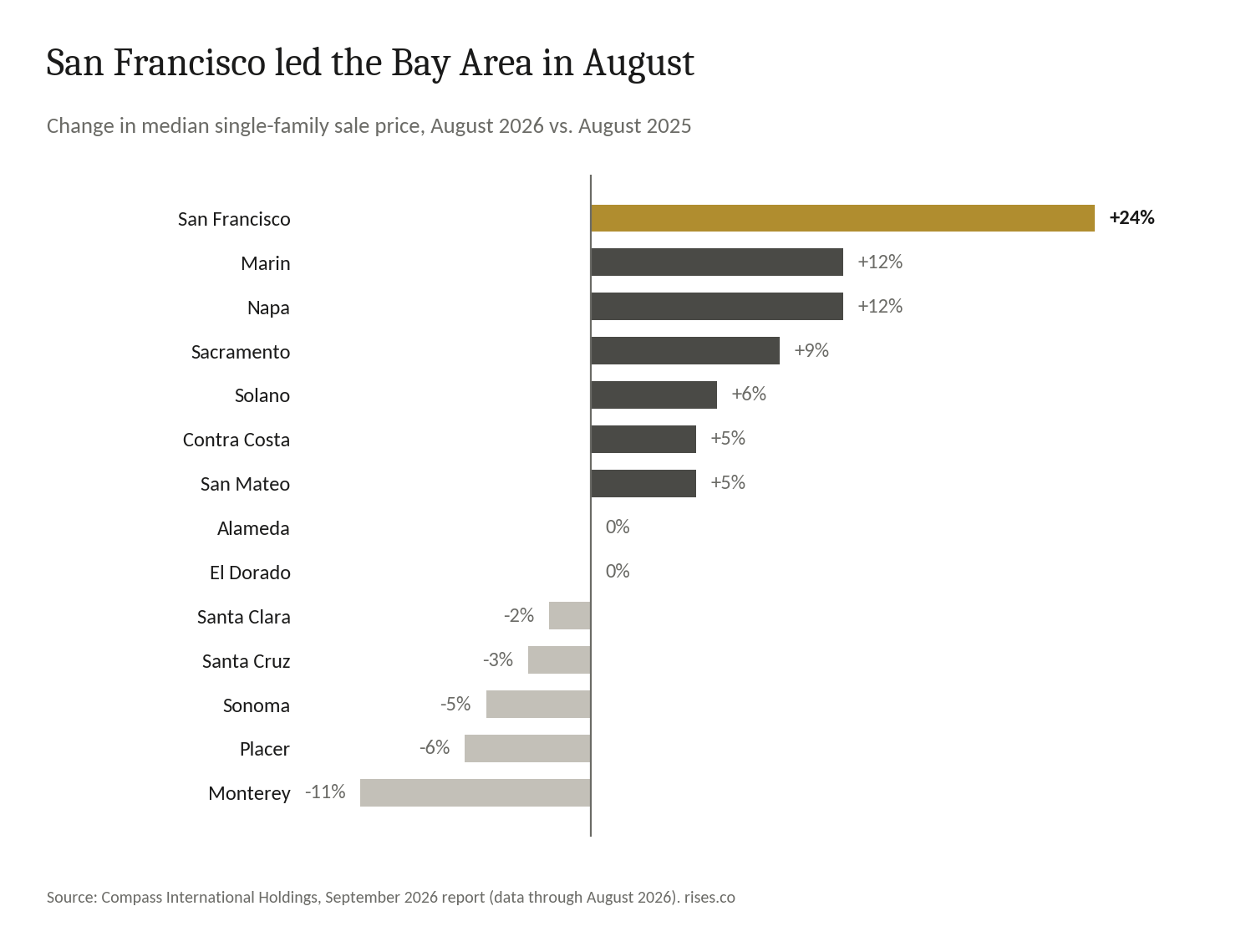
Condos tell a similar story in a quieter voice. Compass has condo medians up year over year in six counties and down in eight. San Francisco is the only one where condo prices and condo sales both grew in a way that means anything.
Rates didn't do this. Freddie Mac's 30-year fixed average was 6.76% on September 10, up from 6.35% a year earlier, and Compass describes rates as stuck near a 15-month high. What's carrying this market is local money, a genuinely thin supply of listings, and, per Compass, inbound migration to the Bay Area that has turned positive for the first time in years. For most buyers at this price point the monthly payment matters, but it isn't what decides the purchase. What decides the purchase is whether the right home exists at all.
Last August was one of the weakest condo months of 2025, with a median right around $1 million. Measure this August against that and you get a big number. Some of that 22% is the base, not the boom.
The better read is the run of months. The condo median was about $1.25 million in July and about $1.23 million in August, a small seasonal step down rather than a new high, and it has now held above $1.2 million since late winter. It hadn't done that consistently since 2022. A plateau at that level tells me more about where this market sits than any single year-over-year percentage.
I'd rather sellers hear it that way. Anchoring to a headline growth rate is how a list price ends up 8% too high, and how a good building ends up with a stale listing by Halloween.
The share of condos closing above list went from 23% last August to 54% this August. That's a 31-point swing in a year, and it's the number I keep coming back to.
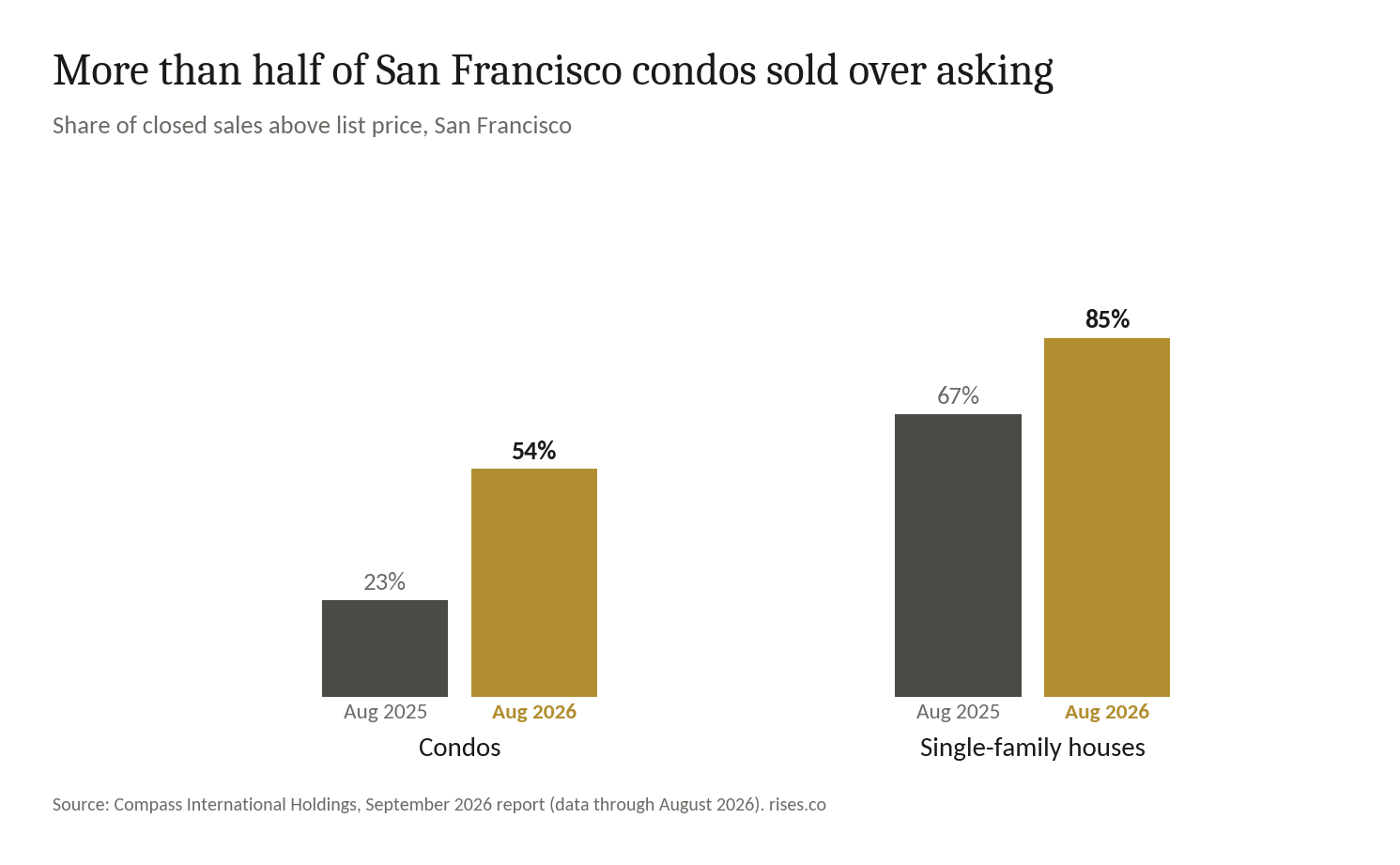
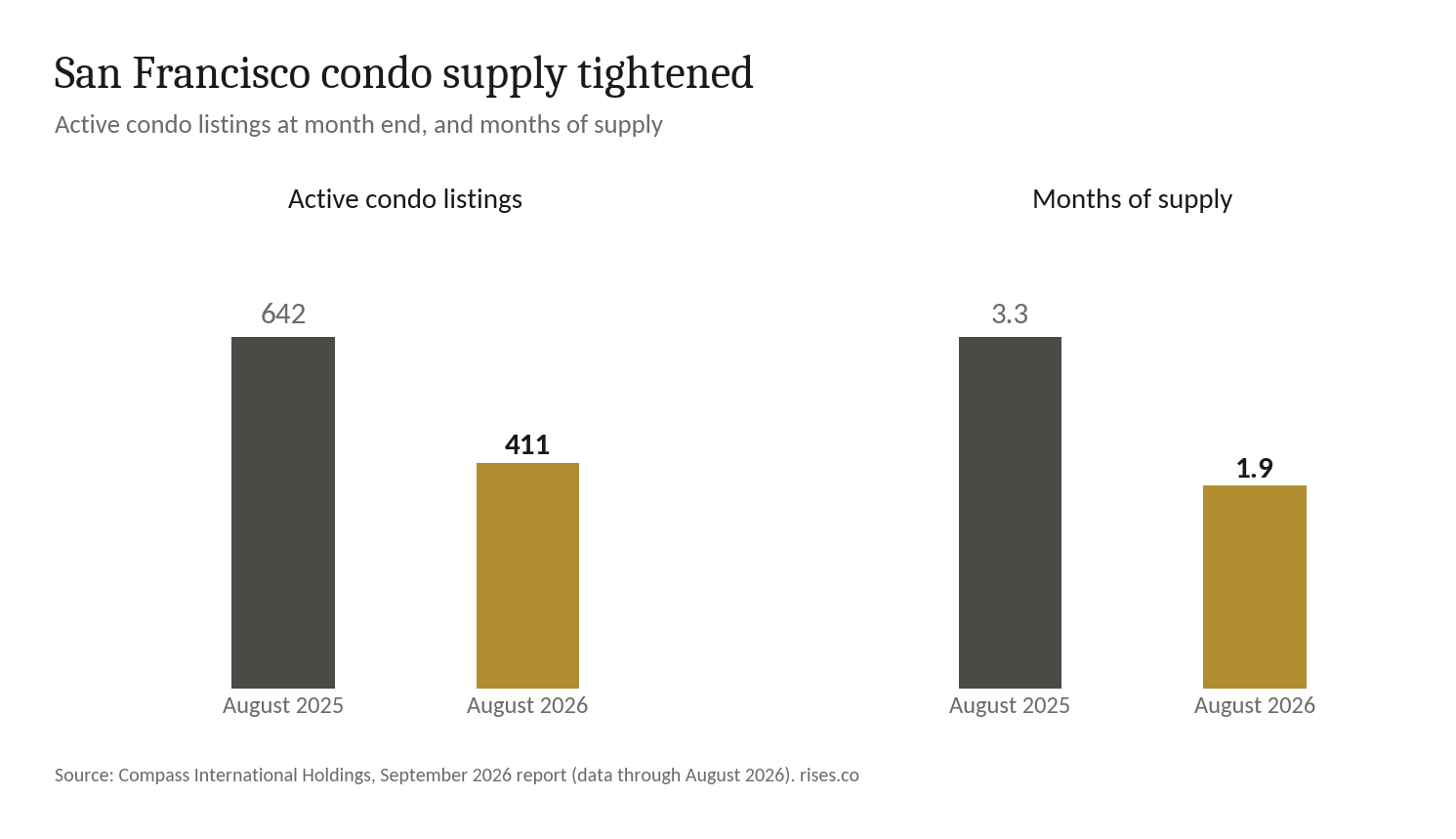
Supply explains most of it. Active condo listings fell from 642 to 411, and months of supply dropped from 3.3 to 1.9. Anything under about three months is a seller's market by the usual rule of thumb, and the condo market hasn't been there in years.
Condos also sold faster, averaging 44 days on market against 60 a year ago. That's still twice as long as a house takes, and I don't expect that gap to close. A condo buyer has a building to underwrite on top of a home: HOA budget, reserve study, insurance certificate, minutes. Careful buyers spend time there, and they should.
The one thing I'd caution against is reading 54% as a guarantee. Nearly half the condos that sold in August still closed at or below asking. The ones that went over were, almost without exception, priced correctly on day one, which is the same pattern I found when I looked at price cuts across the city last month. A strong market rewards a right number. It doesn't forgive a wrong one.
The single-family side ran ahead of condos on nearly every measure. The house median reached $1.855 million, up 24%, and 85% of houses sold above list, an 18-point jump that Compass calls the largest gain anywhere in its report.
Supply is the whole explanation. Only 150 houses closed, and at the end of August there were 169 houses in contract against 157 active listings. More homes under contract than for sale works out to an absorption rate of 108% and roughly one month of supply.
The house median did come off its spring high of $2.2 million in May. That's the seasonal curve, not a turn. Last year traced the same shape before climbing again into October.
A caution before the table. These are one-month samples. Every neighborhood below except South Beach had 12 or fewer closings, and at that size a single large sale moves the median a long way. Read it as a snapshot.
Neighborhood | Aug median condo price | YoY change | Aug median condo $/sq ft | Aug closings (houses + condos) | Active listings, end of Aug (houses + condos) |
|---|---|---|---|---|---|
$1,490,000 | +35% | $1,228 | 22 | 45 | |
$3,100,000 | +138% | $1,455 | 12 | 16 | |
$1,497,500 | +58% | $1,313 | 11 | 19 | |
$1,510,000 | +29% | $1,282 | 10 | 12 | |
$1,400,000 | -9% | $1,100 | 10 | 12 | |
Not reported | Not reported | $836 | 10 | 40 | |
$1,500,000 | +9% | $1,060 | 7 | Not reported | |
Not reported | Not reported | $800 | 8 | 22 |
Source: Compass, September 2026 report. Compass charts only the top-ranked neighborhoods for each measure, so some cells aren't reported. Small samples, directional only.
South Beach did the most business in the city again, 22 closings in August and 280 over the past 12 months, more than any other neighborhood in the report. It also holds the most inventory at 45 listings, and it's working through them at a good pace. Worth noting: in July the data had South Beach appreciation slightly negative, and this month it's up 35%. That swing is the argument against reading any single month of neighborhood data as a verdict.
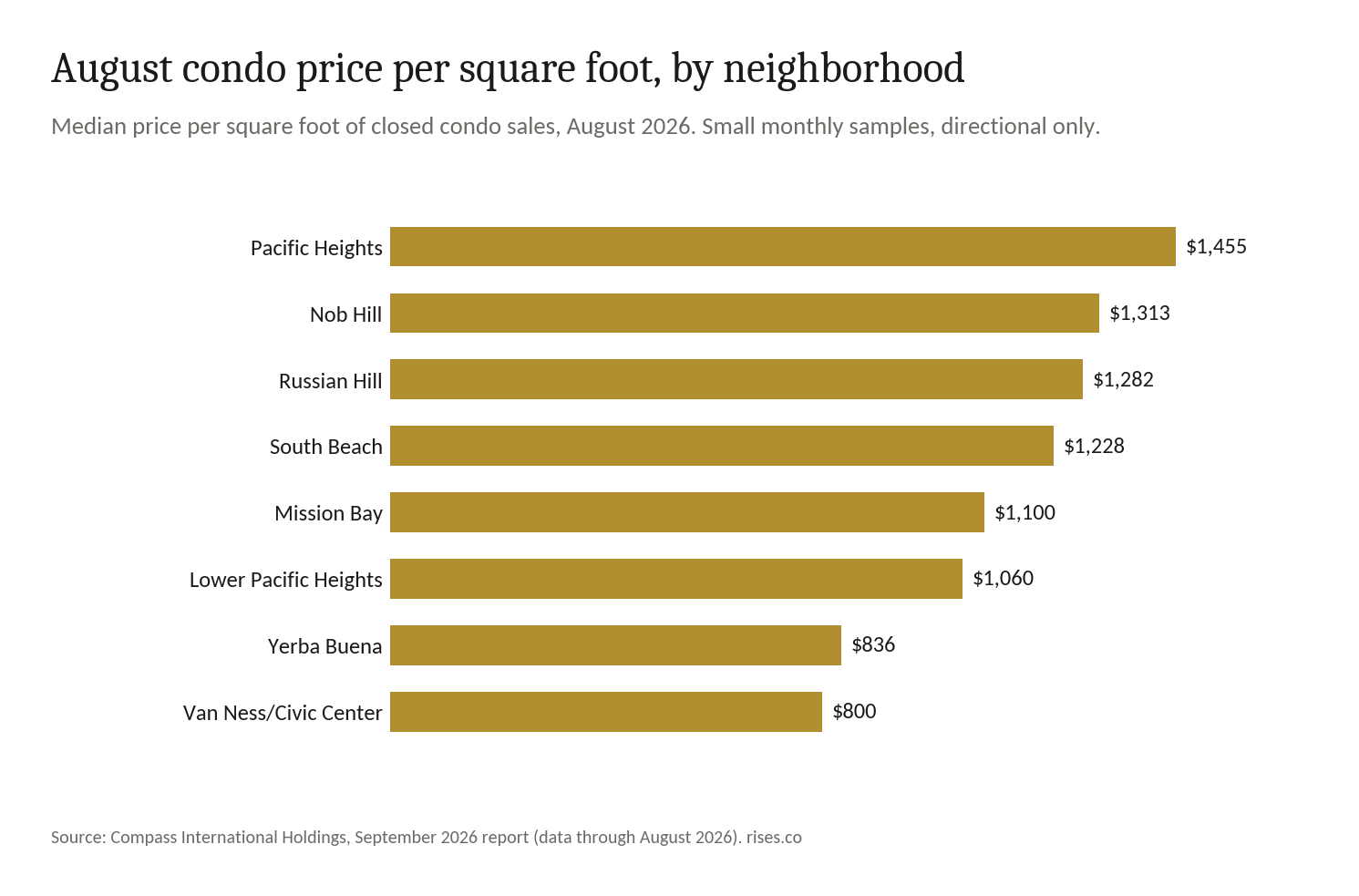
Yerba Buena is the one I'd watch. Forty active listings against ten closings works out to about four months of supply, double what the county shows, and its median of $836 per square foot sits a long way below South Beach's $1,228 a few blocks east. For a buyer, that's where the leverage is this fall. For an owner there, it means pricing and presentation carry more weight than they do almost anywhere else downtown.
Pacific Heights' 138% is a mix story rather than a market story. A handful of sales, a few of them large (the median condo that closed there ran about 1,440 square feet), and the median jumps. Its $1,455 per square foot is the honest number, and it's the highest on the list.
Compass flags August as the first month of data after the new condo lending rules landed, and says it's too early to know whether the slowdown came from the rules or from the season. I'd put it on the season, because of the timing.
Under Fannie Mae Lender Letter LL-2026-03, lenders had to stop using the faster "Limited Review" of a condo building for loan applications dated on or after August 3. A condo that closed in August was, in most cases, in contract and applied for in June or July. Some lenders moved early, but the bulk of last month's closings were underwritten the old way. September and October are the months that will show us something.
What changed is worth knowing even if you aren't buying this year. Most conventional condo loans now get a full look at the building: budget, reserves, insurance, special assessments, litigation, owner delinquencies. Starting with applications dated January 4, 2027, the minimum reserve allocation rises from 10% to 15% of an association's budgeted income. Buildings with ten or fewer units can qualify for a waiver of project review, which is why Compass says it'll be watching small buildings against large ones from here.
For a well-run association, none of this is a problem. For one that's been underfunding reserves and hoping, it's the difference between a buyer's loan closing and a buyer's loan dying in underwriting. I've written before about why a condo gets stuck at the lender, and that piece just got more relevant. This is general information rather than lending advice, so your loan officer should confirm how it applies to a specific building.
From experience: This summer I represented a buyer on a South of Market loft where the right number had almost nothing to do with the list price and everything to do with the building. I spent a night in the association's reserve study and budget: a reserve fund about 12% funded, a freshly adopted emergency assessment, several components already at the end of their useful life. We built the offer off that, came in below asking, walked the listing agent through every figure, and were in contract within days. Under the new rules, that homework is now part of what the lender does too.
Whether the condo median holds above $1.2 million through the fall listing season. If it does, this year's gains are real and not a spring artifact.
Whether small buildings start behaving differently from large ones. If the lending rules bite, it shows up first as longer escrows and more price cuts in buildings with thin reserves.
Whether Yerba Buena's inventory clears. Forty listings is a lot of choice in one small district, and choice is leverage.
The pipeline says the fall season is already underway. New listings rose 7% from July to August, and contracts rose 8%.
Expect company on anything priced correctly, and expect more room on the listings that have already sat. That room is concentrated downtown, Yerba Buena most of all.
Ask for the HOA package the day you get serious about a building, not the day after you're in contract. Now that lenders are reviewing the whole project, a weak reserve fund can end your loan even when your own file is spotless. I read reserve studies before I write offers, and that's become table stakes rather than diligence.
Price to the market on day one. Over half of condos are clearing above asking, but that half is the correctly priced half, and a listing that opens 8% high spends October chasing the market down.
Get the building's paperwork in order before you list: current budget, reserve study, insurance certificate, minutes. Lenders will ask now, and having it ready keeps a deal from stalling at week three. If your reserves are thin, tell me before we launch rather than after an offer comes in, and we'll work out how to present it.
Wondering what August's numbers mean for your building? Sean Mamola brings 17+ years of San Francisco real estate experience and a luxury hospitality background to every client relationship, with a track record that runs from entry-level condos to an $8.7M South Beach penthouse. As a Global Luxury Specialist with Compass, Sean pairs building-level knowledge with the market data behind this report, so buyers and sellers can move with confidence this fall. Schedule a consultation or call (415) 704-3640.
Primary phone
(415) 704-3640License Number
#02056250Address
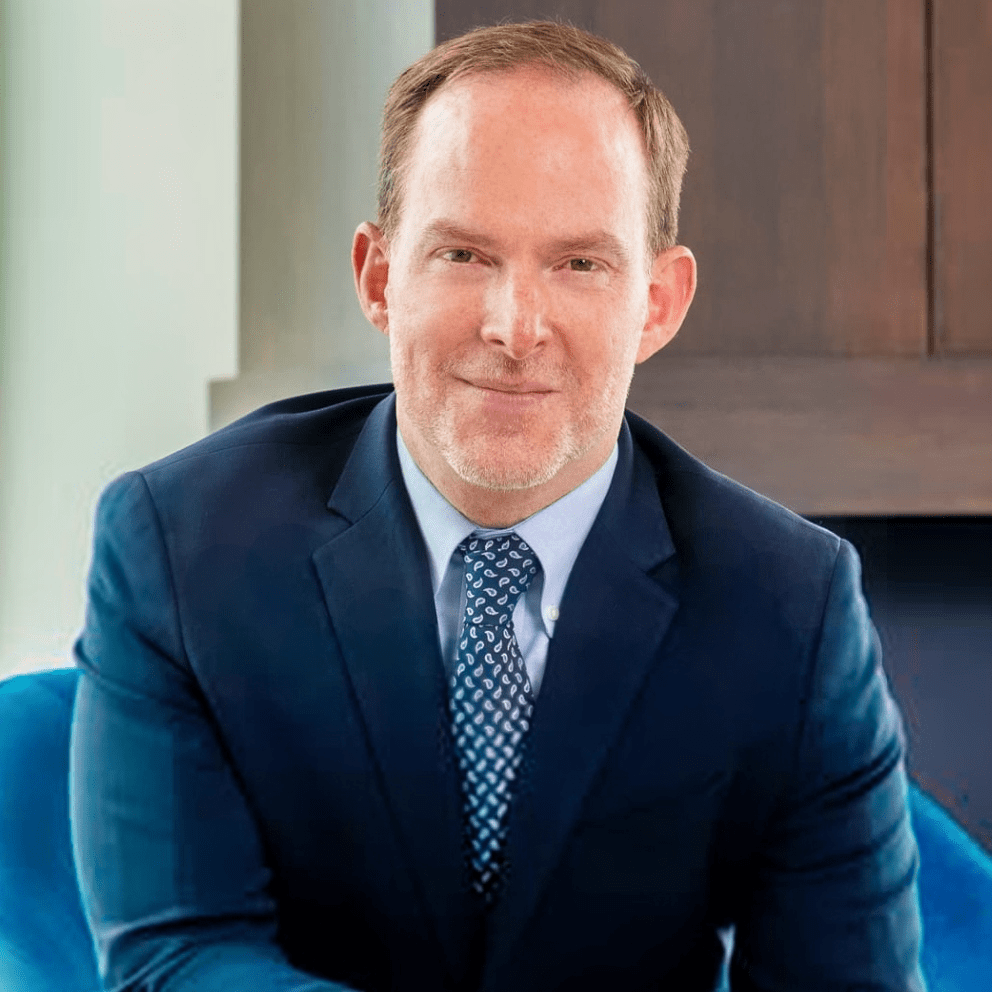
891 Beach St,Sean Mamola is a San Francisco real estate agent who specializes in luxury properties and penthouses throughout the city's most coveted neighborhoods. As a Global Luxury Specialist with Compass and Rises.co, Sean works with discerning clients who are buying and selling exceptional properties in San Francisco. Since 2018 he has closed 75+ transactions and more than $100M in sales volume across the city's high-rise condo and penthouse market.
Sean focuses on San Francisco's premier areas including South Beach, Yerba Buena, Mission Bay, Pacific Heights, Lower Pacific Heights, Russian Hill, and Nob Hill. His deep knowledge of these neighborhoods allows him to guide clients to properties that perfectly match their lifestyle and investment goals.
Whether you're drawn to the modern luxury of South Beach condos, the urban sophistication of Yerba Buena, the waterfront appeal of Mission Bay, the timeless elegance of Pacific Heights, the historic charm of Russian Hill, or the prestigious heights of Nob Hill, Sean understands what makes each area unique.
For Sellers
Sean creates comprehensive marketing strategies that attract qualified buyers with refined tastes. He believes in elegant staging with meticulous attention to detail, ensuring your property makes an unforgettable impression. His marketing reaches both international and local luxury markets, maximizing exposure for condos, penthouses, condotels, and new developments.
For Buyers
Using cutting-edge technology and market research, Sean carefully analyzes pricing and property trends to find homes that satisfy his clients' specific preferences, price points, and lifestyles. His 24/7 availability and white-glove service ensure you never miss the right opportunity.
Working with Sean and his partnership with Rises.co gives clients significant competitive advantages. His vast network of interconnected agents results in winning offers and an impressively low ratio of properties shown to offers accepted. Sean's impeccable work ethic and precise negotiation skills ensure sellers find the right buyer and buyers secure their dream home.
Before becoming a licensed real estate agent, Sean spent years in luxury hospitality, skills he applies to every client relationship and transaction. He has tremendous respect for people's privacy and consistently exceeds expectations – from international travel to execute transactions to handling unique special requests.
As a Bay Area native who lived in New York City for 15 years, Sean brings a global perspective and genuine appreciation for people from all walks of life. His diverse background helps him connect with clients whether they're local San Francisco residents or international buyers seeking their perfect property.
When not working, Sean enjoys cycling, spending time with his large Irish-Italian family, and volunteering for Food Runners, The Richmond/Ermet Aid Foundation (REAF), and Broadway Cares/Equity Fights AIDS. This community involvement reflects his commitment to giving back to the city he serves.
If you're looking for an exceptional San Francisco real estate agent who specializes in luxury properties and provides truly high-touch service, let's talk. Sean is ready to help you find your perfect San Francisco home or achieve the best possible outcome when selling your property.
Specializing in luxury condos, penthouses, and exceptional properties in South Beach, Yerba Buena, Mission Bay, Pacific Heights, Lower Pacific Heights, Russian Hill, and Nob Hill.
Stay up to date on the latest real estate trends.
Sean Mamola | September 17, 2026
The condo median climbed 22% while sales slowed. Here's what actually moved, and what it means this fall.
September 17, 2026

September 10, 2026

Sean Mamola | September 9, 2026
Sell first or buy first? A 2026 guide for San Francisco move-up sellers.

Sean Mamola | September 8, 2026
Selling a San Francisco condo with tenants in place: your options in 2026.

Sean Mamola | September 5, 2026
As-is or renovate before selling? A 2026 decision guide for SF condo sellers.

Sean Mamola | September 4, 2026
Capital gains on a San Francisco home sale, explained for 2026 sellers.

Sean Mamola | September 3, 2026
One investor now controls eleven storefronts across three blocks. The restaurant announcements are the visible part.

Sean Mamola | September 3, 2026
The real costs of selling a San Francisco condo in 2026, broken down.
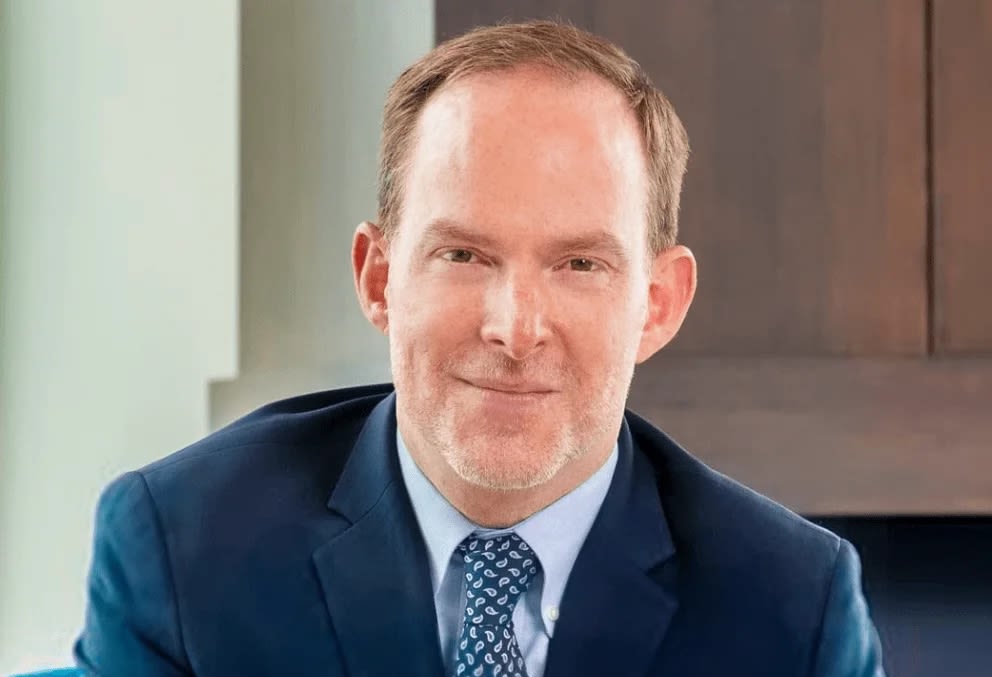
CONTACT SEAN MAMOLA AT RISES.CO
CA DRE# 02056250
891 Beach St.,
San Francisco CA 94109