Paying Over Asking Is Not the Same as Overpaying
Sean Mamola | September 1, 2026
Sean Mamola | September 1, 2026
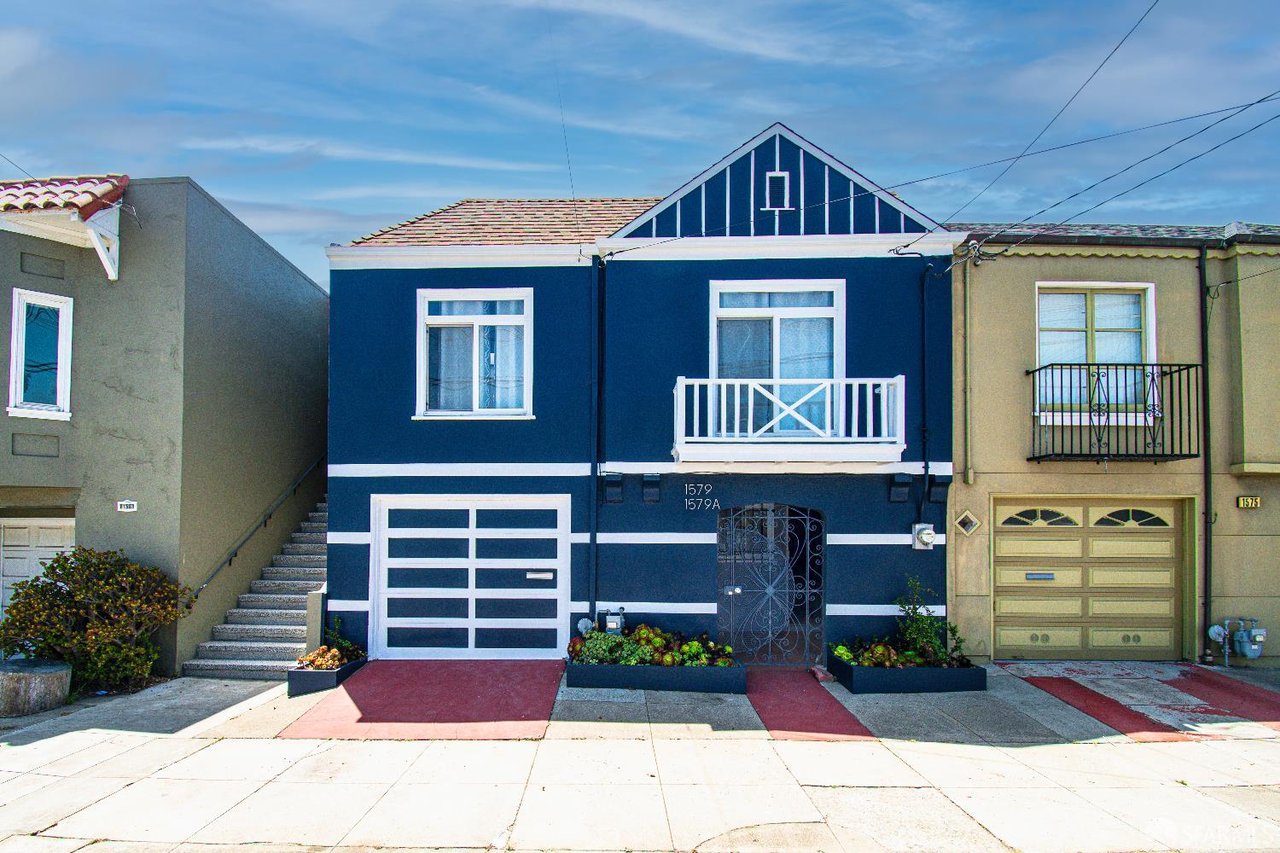
Paying over the asking price and overpaying are two different things, and in San Francisco right now they are not even close. Last September I represented a buyer on a house in the Outer Sunset asking $1,088,800. My client paid $1,420,000, which is $331,200 over list, and that is exactly the kind of number that makes a buyer put the pen down and go home. Eleven months later, on August 27, 2026, Redfin put that house at $1,839,472.
No, and conflating the two is the single most expensive habit a San Francisco buyer can have. The asking price was never the price. It was a marketing decision, and $1,088,800 was chosen to gather a crowd on a Sunday. It did exactly that.
Every buyer who walked that house measured their offer against $1,088,800, because that was the number printed on the flyer. The number on the flyer is the seller's opening move in a negotiation, not an appraisal, not a valuation, and not a ceiling. Anchoring to it is the same mistake as believing a car's sticker price or a hotel's rack rate.
Because in a supply-starved city, the list price has become a bidding mechanic rather than an estimate of value. The Real Deal reported in mid-August that San Francisco buyers are paying roughly 26 percent over asking on single-family homes, a 21-year high. When a whole city clears list by a quarter, "over asking" has stopped measuring anything useful. It measures how the property was marketed, not what it is worth.
That pattern is not isolated to the Outer Sunset. It is the same market behavior behind 44 homes selling a million dollars or more over asking this year, and it shows up in my own data work: when I tracked price cuts across the city, single-family houses were closing near 124 percent of list while barely 10 percent of active houses had reduced at all.
The only spread that matters is the one between what you pay and what the house is actually worth, and those are two completely different questions. One of them is answered by a flyer. The other one you have to do the work on.
The deal, in numbers | |
|---|---|
Original asking price | $1,088,800 |
Purchase price (closed 9/15/2025) | $1,420,000 |
Paid over asking | $331,200 (about 30% over list) |
Estimated value, 8/27/2026 | $1,839,472 (Redfin) |
Change on the purchase price | +$419,472, about +29.5% |
Typical Outer Sunset home, 7/31/2026 | $1,606,476, up 11.8% YoY (Zillow) |
Home | 3 bed, 2 bath, 1,181 sq ft, built 1943 |
Lot | 3,001 sq ft, with a permitted ADU |
The honest test is whether the gain came from the house or from a rising tide. (No pun intended, and for the record this house is three blocks from the ocean, so it is safe from the literal one. Phew.)
Zillow has the typical Outer Sunset home at $1,606,476 as of July 31, 2026, up 11.8 percent over the past year. This one is up roughly 29.5 percent on what my client paid, so it outran its own neighborhood by better than two to one. The tide lifted it, and then the house kept going on its own.
I run this test on every purchase I am proud of, because a market that goes up makes everyone look smart for about eighteen months. Beating your own neighborhood by a factor of two is the part that has to come from the asset, and that is the part a buyer can actually control at the offer stage.
The reasons were all sitting there in plain sight before we ever wrote the offer:
Most of the buyer pool priced a 1,181 square foot house from 1943. My client priced a house with a second income attached and a new park at the end of the street.
That is the whole gap, and it is not a sophisticated insight. It is a willingness to read a disclosure package and a permit history instead of a square footage figure. Nothing about that house was hidden. It was just easier to look at the list price and decide the bidding had gotten crazy.
From experience: the offer that wins in this market is almost never the one from the buyer who was willing to stretch the furthest. It is the one from the buyer who had a reason. On this house, we could name what we were paying for line by line, so when the number went past $1.4 million my client was not guessing about whether it was too much. They were reading their own math. Buyers who cannot do that either freeze or overreach, and both of those are worse outcomes than paying over asking on purpose.
Let me be careful with that $1,839,472, because I would rather be useful than impressive. It is an algorithm's opinion. It is not an appraisal, it is not an offer, and nobody has cashed it. The only number that is ever truly real is the one on a closing statement.
But everything underneath the estimate is real. The rent from that ADU is real. The park is real. The schools are real. And the $331,200 that looked reckless last September now looks like the price of admission.
Automated valuations are useful as a directional read and dangerous as a decision. I use them the way I use a thermometer, which is to tell me roughly what kind of day it is, not to tell me what to wear to a specific meeting. If you are making a real decision on a specific property, you want comparable closed sales, a look at the actual condition and permits, and someone who has been inside the competition.
You stop treating the flyer as the reference point and start building your own. In practice that means four things:
That is the trade my client made, and it came down to a decision to stop arguing with the list price and start underwriting the house. Running with the tide, not against it.
Is it a mistake to pay over the asking price in San Francisco?
Not by itself. With single-family homes citywide clearing roughly 26 percent over asking, a market-rate purchase in San Francisco simply requires paying over list. The mistake is paying over asking without a valuation of your own, because then the seller's marketing number is the only number in the room.
How do I know whether I am overpaying?
Build your own value estimate before you write the offer, using recent closed comparable sales, the actual condition and permit history, and any income the property produces. Compare your offer to that number. If your offer is inside it, you are paying over asking. If it is well outside it and you cannot say why, you may be overpaying.
Does a permitted ADU really change what a house is worth?
It changes the buyer pool and the underwriting, which is what moves price. A legally permitted unit with its own entry can produce rent, house a family member, or make a mortgage workable, and each of those brings a different kind of buyer to the table. Permitted is the operative word, since unpermitted space carries risk that a lender and a future buyer will both price in.
How much did the Outer Sunset appreciate over the past year?
Zillow put the typical Outer Sunset home at $1,606,476 as of July 31, 2026, up 11.8 percent over the past year. The house in this post is estimated about 29.5 percent above its September 2025 purchase price, which is better than double the neighborhood's pace.
Are Zestimates and Redfin Estimates accurate enough to make an offer on?
They are a directional read, not a valuation. They are computed from public records and general market movement, and they cannot see condition, light, layout, a permit history, or the competition on offer day. Use them to sanity-check a range, and use closed comparable sales and a professional opinion to price an actual offer.
Did the new Great Highway park affect Outer Sunset home values?
Sunset Dunes, the 77-acre, two-mile oceanfront park on the former Great Highway, opened in April 2025 and changed what a walk from these blocks feels like. Isolating its effect on price from the rest of a strong citywide market is not something any dataset can do cleanly yet, but it belongs in the column of durable reasons a specific block draws a deeper buyer pool.
Are you trying to figure out what a San Francisco property is actually worth, rather than what it is being marketed at? Sean Mamola is a Global Luxury Specialist with Compass and a Bay Area native with 17+ years of experience, and a track record running from entry-level condos to an $8.7M South Beach penthouse. He builds buyers an independent valuation before offer day, so the decision to pay over asking is a decision, not a reaction.
Schedule a consultation or call (415) 704-3640.
Sean Mamola, Global Luxury Specialist, Compass. DRE 02056250.

Primary phone
(415) 704-3640License Number
#02056250Address
891 Beach StSean Mamola is a San Francisco real estate agent who specializes in luxury properties and penthouses throughout the city's most coveted neighborhoods. As a Global Luxury Specialist with Compass and Rises.co, Sean works with discerning clients who are buying and selling exceptional properties in San Francisco. Since 2018 he has closed 75+ transactions and more than $100M in sales volume across the city's high-rise condo and penthouse market.
Sean focuses on San Francisco's premier areas including South Beach, Yerba Buena, Mission Bay, Pacific Heights, Lower Pacific Heights, Russian Hill, and Nob Hill. His deep knowledge of these neighborhoods allows him to guide clients to properties that perfectly match their lifestyle and investment goals.
Whether you're drawn to the modern luxury of South Beach condos, the urban sophistication of Yerba Buena, the waterfront appeal of Mission Bay, the timeless elegance of Pacific Heights, the historic charm of Russian Hill, or the prestigious heights of Nob Hill, Sean understands what makes each area unique.
For Sellers
Sean creates comprehensive marketing strategies that attract qualified buyers with refined tastes. He believes in elegant staging with meticulous attention to detail, ensuring your property makes an unforgettable impression. His marketing reaches both international and local luxury markets, maximizing exposure for condos, penthouses, condotels, and new developments.
For Buyers
Using cutting-edge technology and market research, Sean carefully analyzes pricing and property trends to find homes that satisfy his clients' specific preferences, price points, and lifestyles. His 24/7 availability and white-glove service ensure you never miss the right opportunity.
Working with Sean and his partnership with Rises.co gives clients significant competitive advantages. His vast network of interconnected agents results in winning offers and an impressively low ratio of properties shown to offers accepted. Sean's impeccable work ethic and precise negotiation skills ensure sellers find the right buyer and buyers secure their dream home.
Before becoming a licensed real estate agent, Sean spent years in luxury hospitality, skills he applies to every client relationship and transaction. He has tremendous respect for people's privacy and consistently exceeds expectations – from international travel to execute transactions to handling unique special requests.
As a Bay Area native who lived in New York City for 15 years, Sean brings a global perspective and genuine appreciation for people from all walks of life. His diverse background helps him connect with clients whether they're local San Francisco residents or international buyers seeking their perfect property.
When not working, Sean enjoys cycling, spending time with his large Irish-Italian family, and volunteering for Food Runners, The Richmond/Ermet Aid Foundation (REAF), and Broadway Cares/Equity Fights AIDS. This community involvement reflects his commitment to giving back to the city he serves.
If you're looking for an exceptional San Francisco real estate agent who specializes in luxury properties and provides truly high-touch service, let's talk. Sean is ready to help you find your perfect San Francisco home or achieve the best possible outcome when selling your property.
Specializing in luxury condos, penthouses, and exceptional properties in South Beach, Yerba Buena, Mission Bay, Pacific Heights, Lower Pacific Heights, Russian Hill, and Nob Hill.
Stay up to date on the latest real estate trends.
Sean Mamola | October 23, 2026
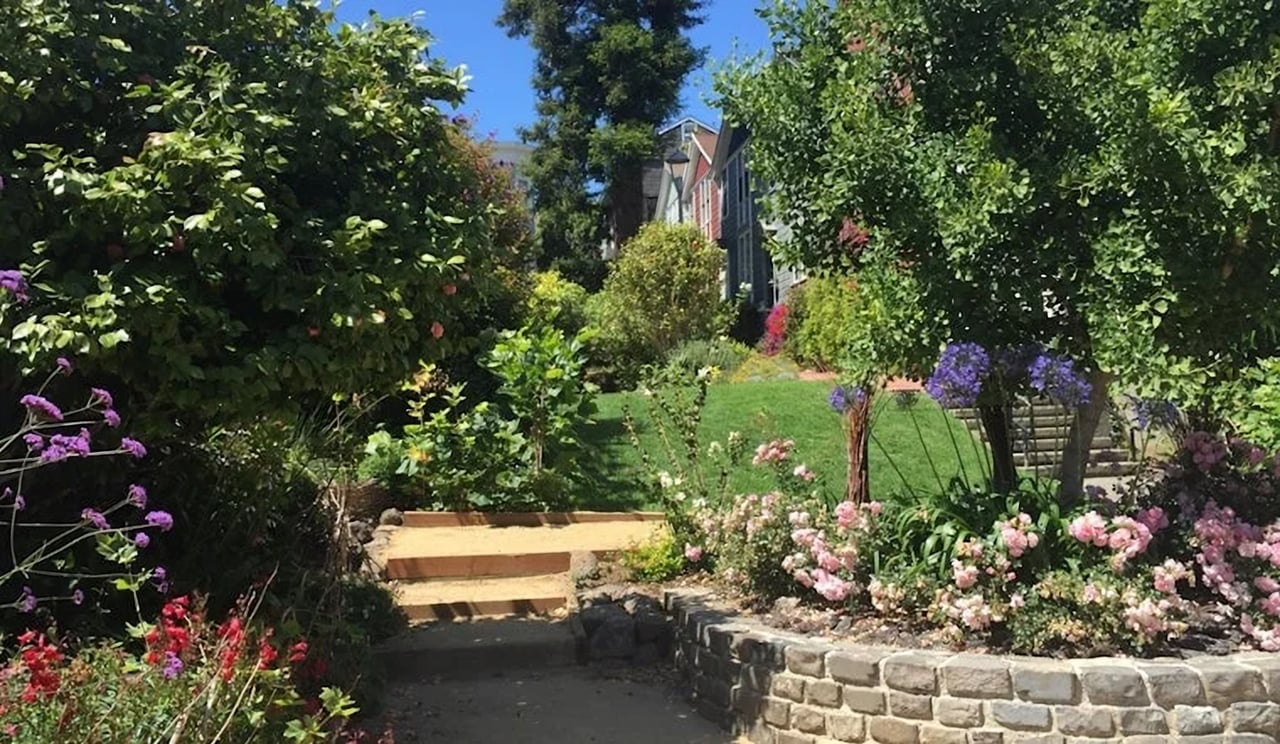
A car-free brick walkway, a row of 1882 cottages, and the "Japan Street" story every owner nearby should know.
Sean Mamola | October 22, 2026
A Saturday Halloween runs from a Church Street dog parade to Fair Oaks after dark

Sean Mamola | October 19, 2026
Off-market or on the MLS? A 2026 guide for San Francisco condo sellers.

Sean Mamola | October 16, 2026
How a 1031 exchange defers capital gains on a San Francisco investment property.

Sean Mamola | October 15, 2026
One construction fence comes down, and another goes up across Post Street.
Sean Mamola | October 15, 2026
The disclosures and reports a San Francisco seller must provide in 2026.

Sean Mamola | October 14, 2026
What Yerba Buena condo buyers need to know in 2026: value, buildings, and leverage.
Sean Mamola | October 13, 2026
What Mission Bay condo buyers need to know in 2026: prices, buildings, and pace.

Sean Mamola | October 12, 2026
Two-thirds of condos sold over asking and the median rose 23%. Then mortgage rates climbed to 7.40%. Here's how I'm reading both.

CONTACT SEAN MAMOLA AT RISES.CO
CA DRE# 02056250
891 Beach St.,
San Francisco CA 94109